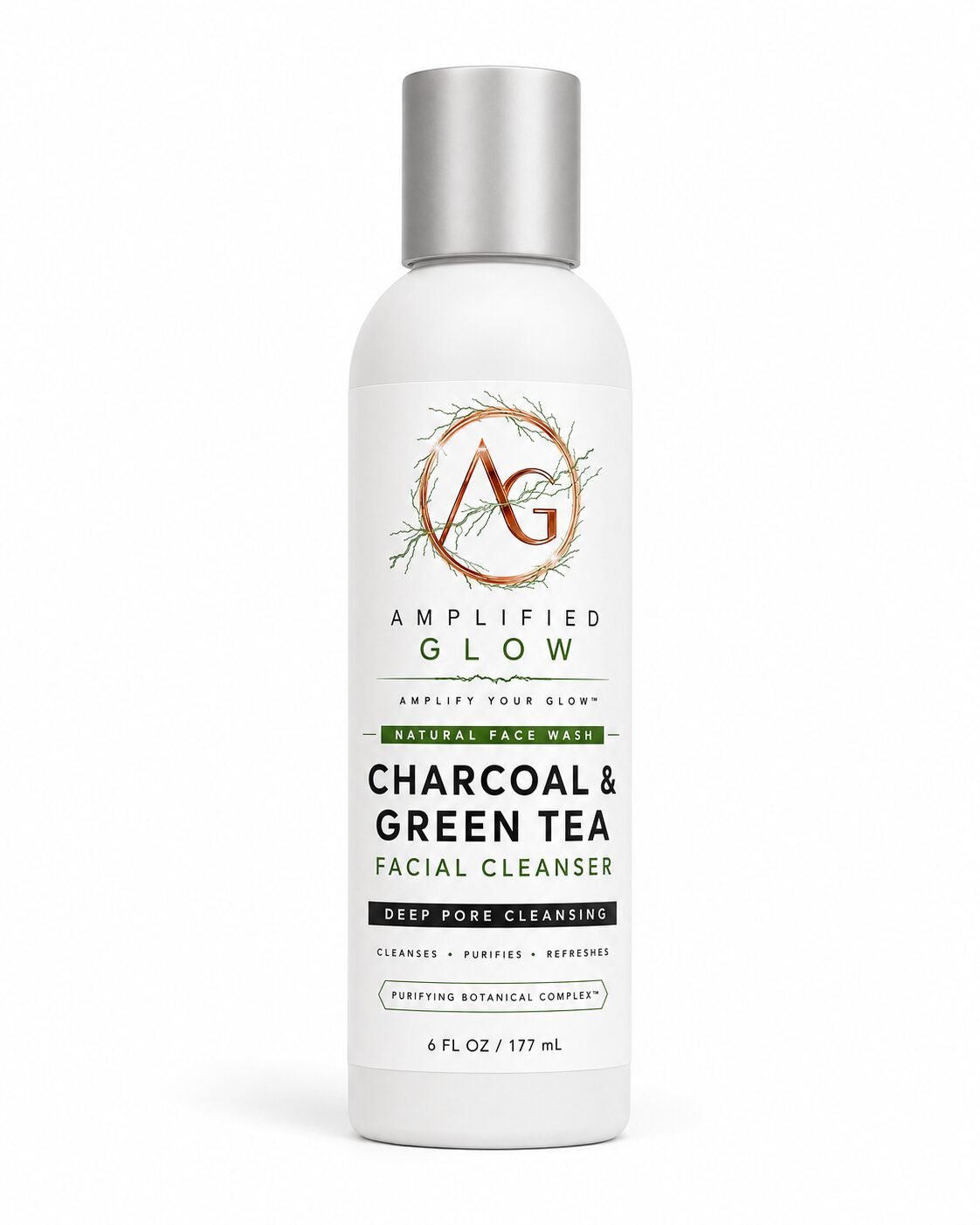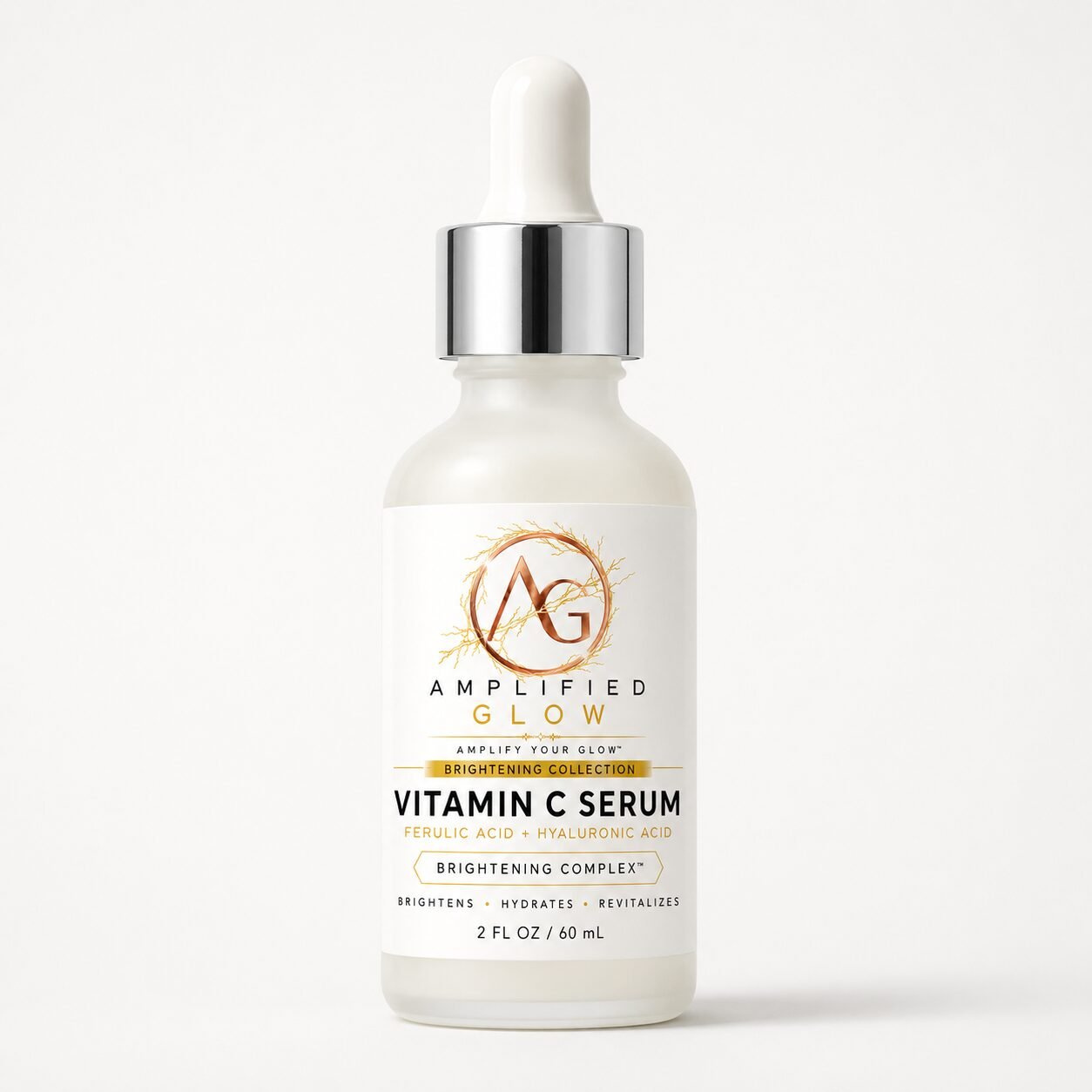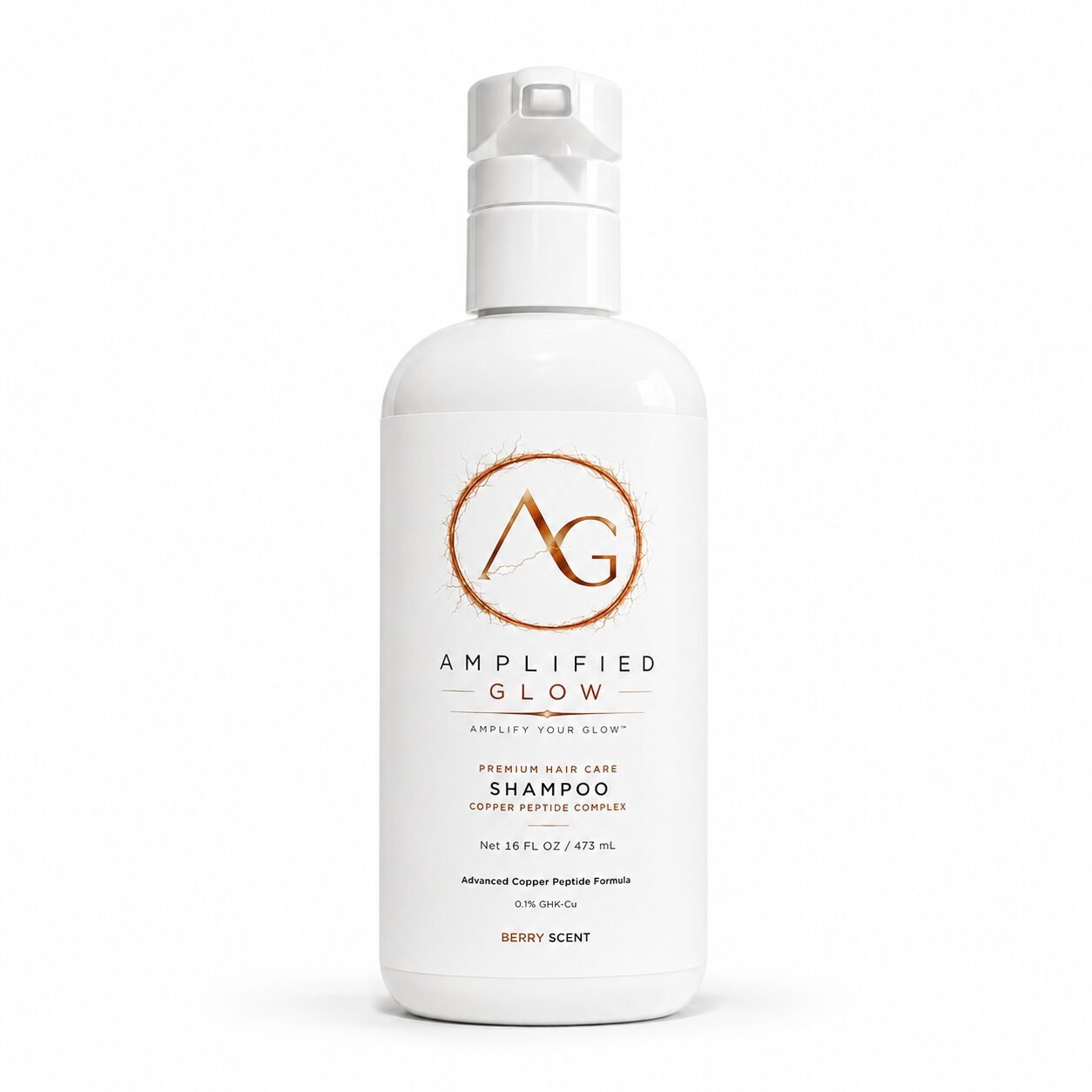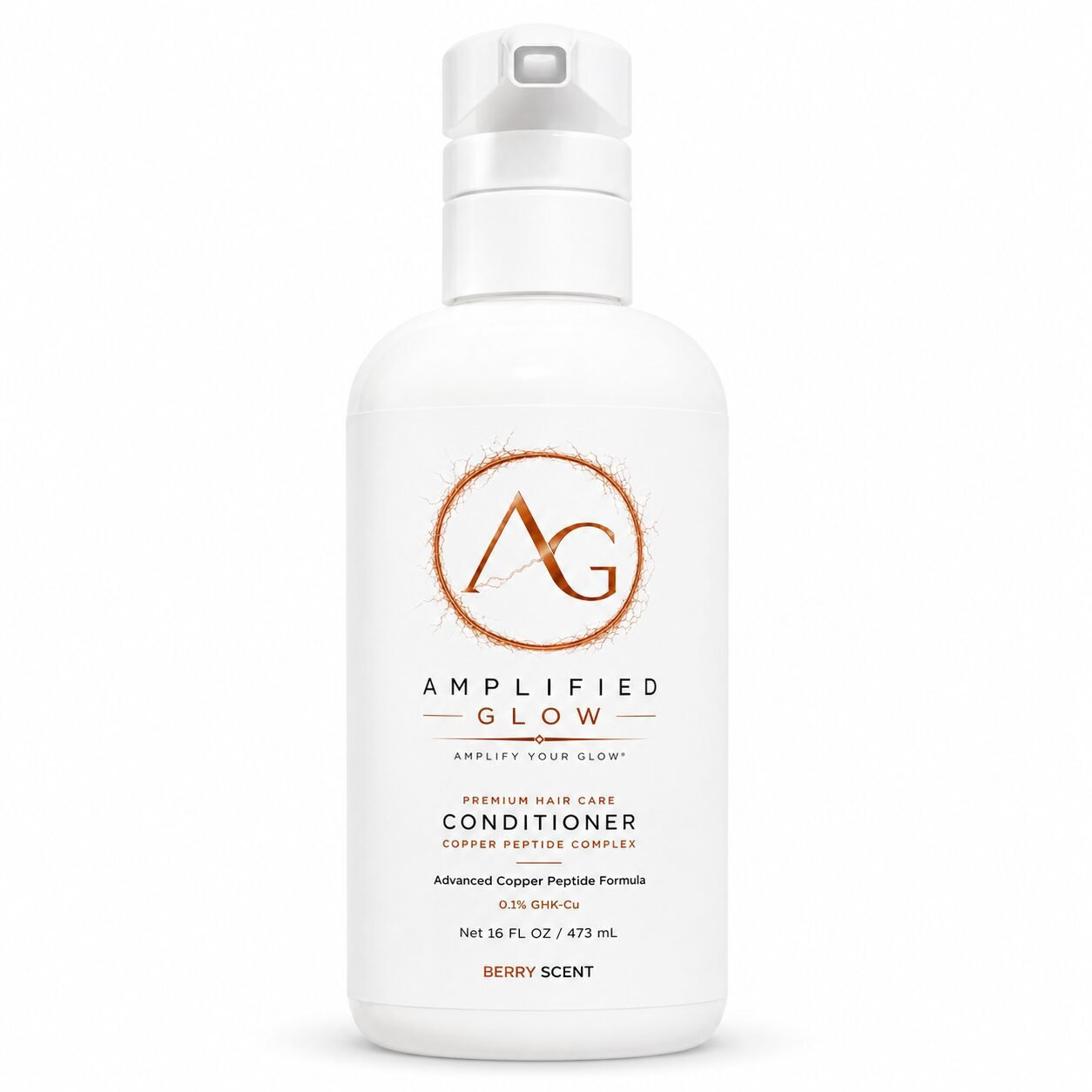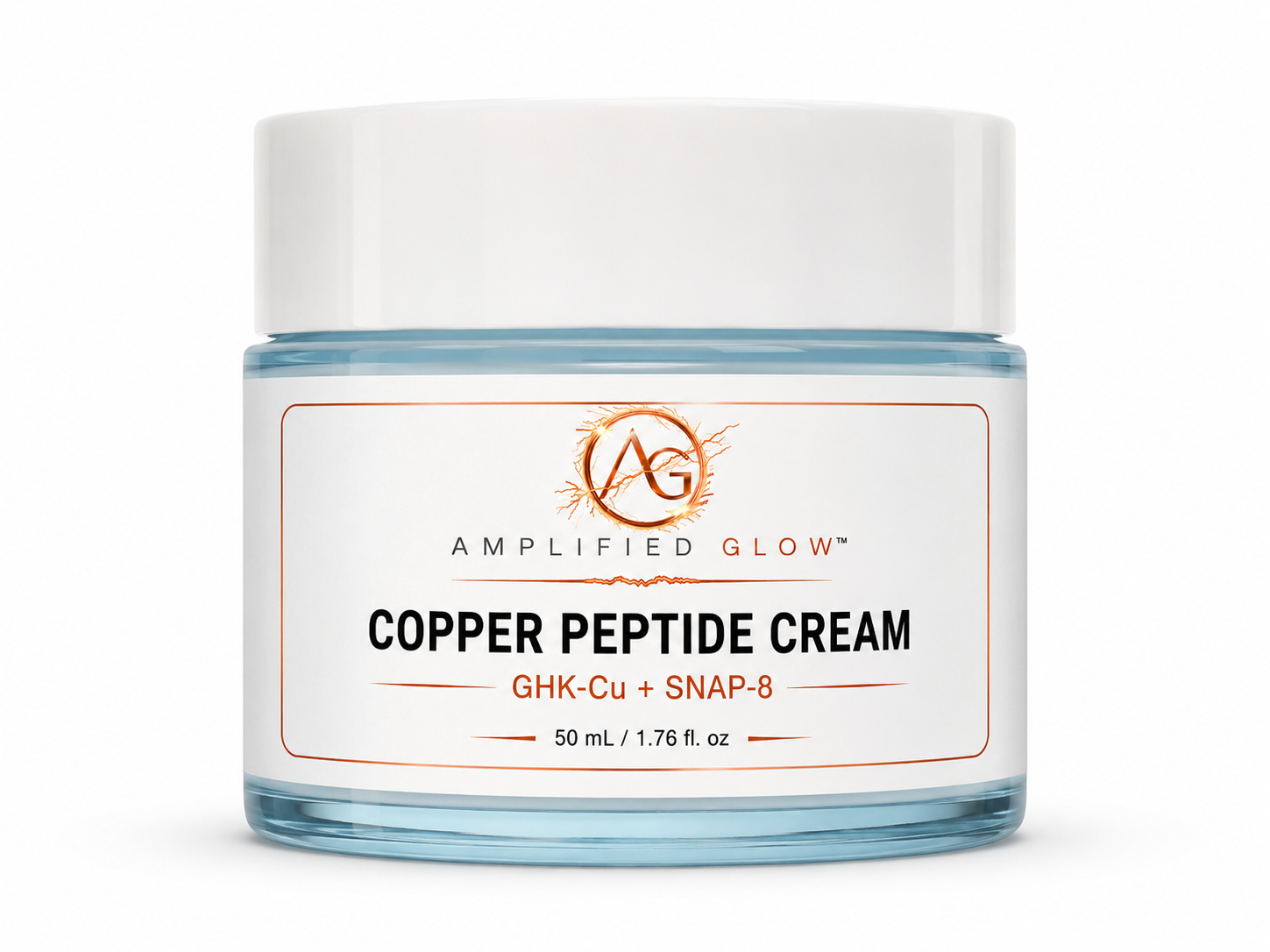
A peptide serum is a skincare product — usually a lightweight, water- or gel-based formula — that lists one or more peptide ingredients on its label. "Peptide serum" describes a product category, not a single ingredient or a guaranteed result: two products both labeled "peptide serum" can use entirely different peptides, at different concentrations, in entirely different supporting formulas. The complete ingredient list and the evidence behind it tell you more than the category name ever will.
What makes a serum a peptide serum?
A peptide is a short chain of amino acids — smaller than a full protein, built from the same basic building blocks. A "peptide serum" is simply a serum-format product that includes at least one peptide among its ingredients.
"Serum," as a format, usually means a lightweight, fast-absorbing texture applied to clean skin before a heavier moisturizer. That's a texture and routine-placement description, not a potency claim: a serum isn't automatically more concentrated than a cream, and a thin texture doesn't mean an ingredient penetrates more deeply. Format and delivery are two different questions — a lightweight feel tells you about the vehicle, not about how much of any ingredient is included or how it performs.
How to read peptide names on a label
Peptide ingredient names can be confusing, since they follow a formal naming system (INCI, the International Nomenclature of Cosmetic Ingredients) that doesn't always match the friendlier trade name a brand uses in its marketing. A short glossary helps:
| Label term | What it identifies | What it doesn't tell you |
|---|---|---|
| Copper Tripeptide-1 | The INCI name for GHK-Cu, a peptide bound to a copper ion | The exact percentage used, or how the finished formula performs |
| Palmitoyl Tripeptide-1 | A tripeptide linked to a fatty acid (a palmitoyl group) — a different chemistry from GHK-Cu | Whether it's the primary active ingredient or a smaller supporting one |
| "Peptide" (used alone in marketing copy) | A short chain of amino acids — the broad ingredient category | Which specific peptide is used, or whether it's copper-bound, palmitoylated, or another type entirely |
| Acetyl [word]peptide-[number] (for example, Acetyl Octapeptide-3, Acetyl Hexapeptide-8) | A family of synthetic peptide names that look similar but identify different molecules | Which exact peptide a specific product contains — these names are easy to confuse; check the current full ingredient list or ask the manufacturer |
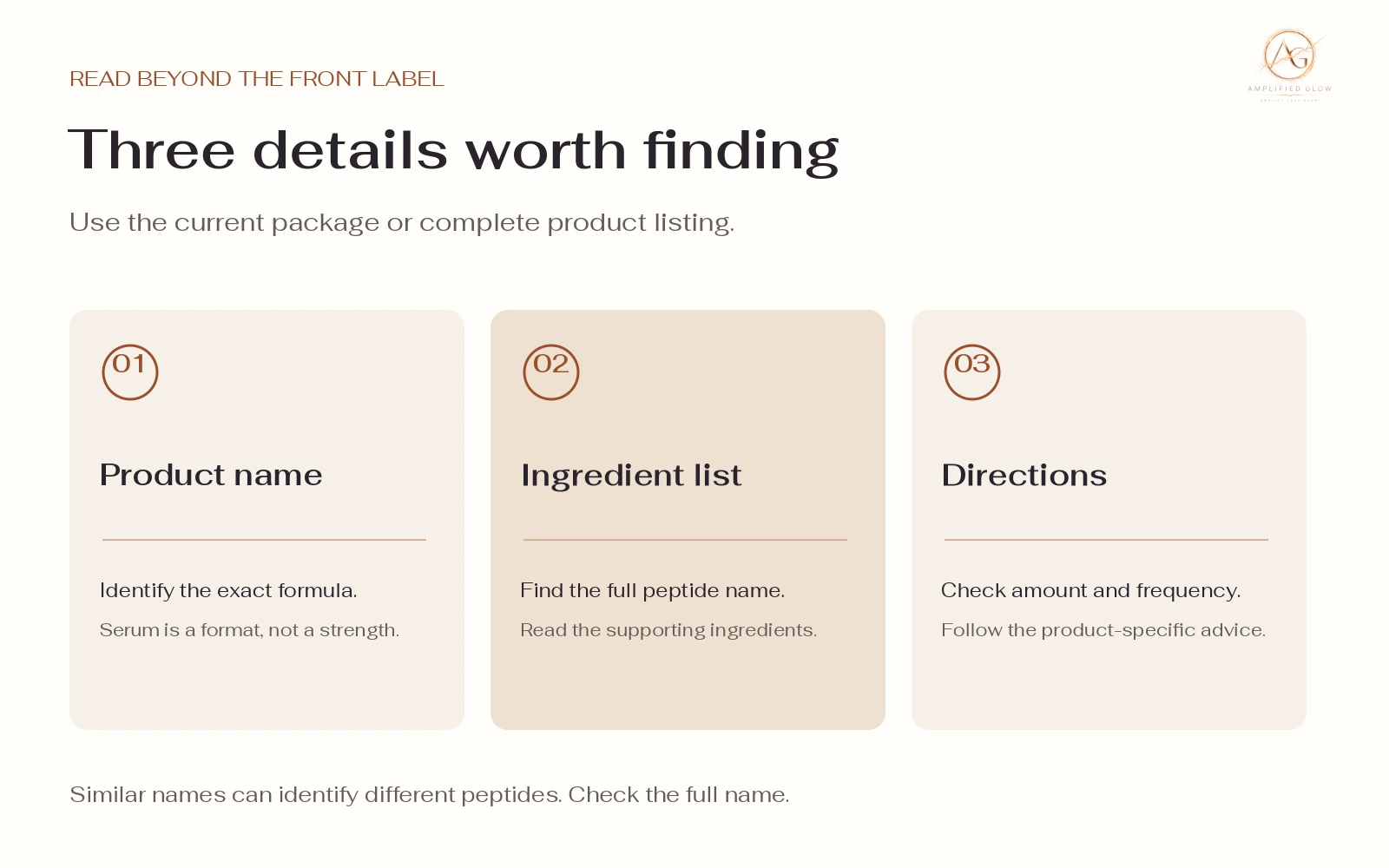
Two ingredients with similar-sounding names aren't necessarily related, and two products both describing "a peptide complex" aren't necessarily using the same one. When a specific claim matters to you, look for the full INCI name rather than relying on the trade name alone. On any product's packaging or listing, three things are worth locating: the product name, the complete ingredient list, and the directions for use — together, they tell you far more than a headline ingredient callout does.
What benefits can you reasonably expect?
A serum's hydrating, smoothing feel usually comes from the whole formula — humectants like hyaluronic acid, emollients, and the base texture — not from the peptide alone. A peptide-specific claim (a softer appearance of fine lines, improved texture) should be backed by evidence about that exact molecule in a comparable preparation, not just its presence somewhere on the label.
For GHK-Cu specifically, a 2025 review discusses promising laboratory findings, limited clinical evidence and formulation challenges. Our copper peptides for skin guide explains those limitations in more detail. Including an ingredient is not the same as proving a finished serum delivers a specific result.
Is a peptide serum necessary?
A peptide serum isn't a requirement for healthy-looking skin — it's an optional step some people add for a specific goal (hydration, texture, or targeting a particular concern), or simply because they enjoy the feel of an extra product. If your current routine already covers cleansing, moisturizing, and sun protection, and you're satisfied with how your skin looks and feels, there's no obligation to add a serum on top of it.
If you're curious about a specific benefit, a serum can be a reasonable, low-commitment way to test that — introduced gradually, with attention to how your skin responds. Cost and routine complexity are legitimate reasons to skip a serum, not signs you're doing skincare "wrong."
Where does it fit in a skincare routine?
A serum typically follows cleansing and comes before a heavier moisturizer, depending on the product instructions. The American Academy of Dermatology recommends cleansing, applying any treatment, then moisturizer and/or sunscreen. This is general routine guidance, not an endorsement of peptide serums. There's no universal amount, frequency, or waiting period that applies to every peptide serum — follow the specific product's own label directions.
How do you choose a formula?
Five things matter more than the headline peptide name on the front of the bottle:
- Ingredient identity. The exact peptide named, ideally by its INCI name, rather than a vague "peptide complex" claim.
- The complete formula. The full ingredient list, not just the featured peptide — supporting hydrators and the base formula shape most of what you'll actually notice.
- Directions. How much to use, how often, and where it fits your routine, per that specific product's label.
- Evidence for the specific claim being made. Is the claim about the exact ingredient in this product, tested in a comparable way, or a general "peptides help skin" statement borrowed from a different molecule entirely?
- Fit with your own preferences. Texture, scent, size, and budget matter as much as the ingredient list for whether you'll actually use a product consistently.
Peptide serum or peptide cream?
Serum and cream are both formats that can carry the same peptide — the difference is mostly texture and where each fits in a routine, not which one is "stronger." A serum is typically lighter and applied first; a cream is typically richer and often serves as the moisturizing step itself. Neither format is automatically more effective; that depends on the complete formula. For a fuller comparison — including when each format tends to fit better and whether you need both — see peptide serum vs peptide cream.
Common questions
Does every peptide serum contain copper peptides?
No. "Peptide serum" is a broad category — some use copper-bound peptides like GHK-Cu, others use different peptides like Palmitoyl Tripeptide-1, and some combine several. Check the specific ingredient list rather than assuming from the category name.
Is a serum automatically stronger than a cream?
No. Serum and cream are texture and format descriptions, not concentration or potency claims. A lightweight texture doesn't mean more active ingredient or deeper penetration — that depends on the specific formula.
Do I need moisturizer after a peptide serum?
Often, yes, though it depends on your skin and the specific product's directions. Many serums are designed to be followed by a moisturizer; some richer serums may not require one for every skin type.
Can I introduce a peptide serum while using other active ingredients?
It depends on the product directions, the other actives and your skin. Introduce new products gradually; tolerance varies by person and combination. Patch-test any new addition, and avoid adding several new active ingredients to your routine at once if you want to know what's actually causing a reaction, should one occur.
How should I judge whether a serum suits my routine?
By how your skin feels and looks with consistent use, how well it fits your existing steps, and whether the ingredient list and directions match what you were looking for — not by the category name alone or a single week's results.
References
- Mortazavi SM, Mohammadi Vadoud SA, Moghimi HR. Topically Applied GHK as an Anti-Wrinkle Peptide: Advantages, Problems and Prospective. BioImpacts. 2025;15:30071. PubMed
- American Academy of Dermatology. Should I apply my skin care products in a certain order?.