Select each adult's exposed areas. Choose every region that will be uncovered. For packing, count a partly covered region in full, and add a profile for each adult sharing the supply.
Pick your task. Use Amount to use for one application, Pack for a trip for a holiday supply, or Bottle life to estimate how long a bottle lasts.
Add your schedule and bottle. Enter trip days, hours outdoors, your reapplication plan and bottle size in mL or US fl oz, then copy or print your plan.
How much sunscreen do I need?
Face, neck and ears
Use about 5 mL, or one metric teaspoon, for the face, neck and ears together. This is an adult reference amount for the whole region. It is not a personalized dose for the face alone.
Full adult body
Use about 35 mL, or seven metric teaspoons, when all seven regions are exposed. These are broad reference amounts for adult lotions and creams. A larger body, or product lost while applying, can mean you need more. Cover exposed skin thoroughly and follow your sunscreen label.
Approximate adult amount per application
Region
Amount
Metric teaspoons
Face, neck and ears (together)
5 mL
1
Left arm
5 mL
1
Right arm
5 mL
1
Left leg
5 mL
1
Right leg
5 mL
1
Front of torso
5 mL
1
Back of torso
5 mL
1
All seven regions
35 mL
7
The regional amounts follow guidance from Cancer Council Australia and Health Canada. Both use a 35 mL adult total, and Health Canada also reminds you not to miss your ears.
Worked examples for bottles and trips
How long does a 50 mL bottle of sunscreen last?
A 50 mL bottle (about 1.7 US fl oz) holds about 10 complete face, neck and ears applications at 5 mL each. That lasts 10 days at one application a day, or 5 days at two a day. On a full body at 35 mL, the same bottle covers one complete application with 15 mL left. A 100 mL bottle used on the face, neck and ears twice a day lasts about 10 days. These are example inputs, not a recommended schedule. Some product also usually stays in the packaging.
How much sunscreen to pack for 7 or 14 days
Example plan: one adult with all seven regions exposed and 4 hours outdoors each day. The first application goes on 15 minutes before going out, with reapplication every 2 hours in dry conditions. The plan has no extra top-ups and no reserve.
3 applications a day: one before you leave, then 1 hour 45 minutes and 3 hours 45 minutes into the outing
105 mL a day (3 applications of 35 mL)
7 days: 735 mL, or 8 bottles of 100 mL
14 days: 1,470 mL, or 15 bottles of 100 mL
4 adults on the same 7-day plan: 2,940 mL, or 30 bottles of 100 mL
Bottle counts are rounded up. Changing the areas, hours, interval or number of adults changes the total, so no single bottle count fits every week. The 4-adult figure does not apply to children.
How much will my sunscreen cost?
To get a budget, enter the price you pay for one full bottle of the size you entered. The planner divides that price by the bottle's volume and shows two separate figures. One is the value of the sunscreen you use. The other is the money you need for any new full bottles. Leave the price blank to hide costs, or enter 0 if you like.
Value used applies your price to every mL in the plan, including sunscreen you already own. Bottles you already have may have cost a different amount.
New purchase cost counts only the full bottles you still need after your existing stock is subtracted. Bottles are rounded up, so you may have some left over.
Choosing a currency changes how amounts are displayed. It does not convert between currencies. Tax and shipping are not included, and the planner does not look up store prices.
Worked example: a 7-day trip
The prices here are made-up numbers to show the arithmetic. They are not current product prices. One adult uses 35 mL per application, 3 applications a day, for 7 days, with no reserve. A full 100 mL bottle costs 20 USD, so each mL is worth 0.20 USD.
One application: 35 mL, worth 7.00 USD
One day: 105 mL, worth 21.00 USD
Whole trip: 735 mL, worth 147.00 USD
Already owned: one full 100 mL bottle, which leaves a 635 mL shortfall
New bottles: 635 ÷ 100 = 6.35, rounded up to 7 bottles, which cost 140.00 USD
Here is how the two totals fit together. The bottle you already own covers 100 mL, worth 20 USD at this price. That leaves 127 USD of the trip's value to buy. The planner counts whole bottles, so you buy 700 mL for 140 USD. After the trip, 65 mL is left over, worth 13 USD.
Adding a reserve
A reserve is extra sunscreen you choose to pack. It raises the packing value and can raise the number of bottles to buy. The trip usage value stays the same, because it counts only what the plan expects you to use.
If the total is more than you expected, do not use less sunscreen to make a bottle last longer. Applying too little reduces protection.
Sunscreen questions, answered
How often should I reapply sunscreen outdoors?
Reapply at least every two hours, and sooner when your label or activity calls for it. The planner starts this clock at your first application, which includes the time before you go out. A schedule helps you plan your supply, but it does not guarantee protection.
Do I need more after swimming, sweating or towel drying?
Yes. In the US, water-resistant labels state either 40 or 80 minutes for swimming or sweating. No sunscreen is waterproof, and towelling can rub it off. If you choose a 40- or 80-minute plan, the planner applies that interval across your whole outdoor window as a cautious packing assumption. Enter towel-dry top-ups as extra applications.
How long before going outside should I apply it?
The FDA and Health Canada say 15 minutes, while Cancer Council Australia says 20. Follow your product label. The planner counts this lead time. For example, 2 hours outdoors with a 15-minute lead and a 2-hour interval counts as 2 applications.
Does SPF 50 mean I can use less or stay out longer?
No. SPF 50 does not mean 50 minutes, and a higher SPF does not extend the time before you need to reapply. Applying too little reduces protection. This tool estimates quantity, not safe time in the sun, so use sunscreen alongside shade, clothing, a hat and sunglasses.
Is the two-finger rule an exact measurement?
No. It is a visual guide, and the amount it gives varies with hand size, nozzle and formula. The American Academy of Dermatology relates finger lengths to its advice of at least one teaspoon for the face. This calculator gives its amounts directly in mL and metric teaspoons instead.
Can I use it for children, sprays or sticks?
No. Count adults only, and do not count a child as half an adult. The planner uses adult lotion and cream volumes and does not estimate spray time or stick passes. For children, follow the product label. Ask a doctor before using sunscreen on a baby under six months.
Is bottle life the same as expiry?
No. Bottle life estimates when you may run out. Check the expiry date and how the sunscreen has been stored. FDA guidance in the US says to discard sunscreen with no expiry date three years after purchase, or right away if you do not know its age.
Can I enter a 50 g tube as 50 mL?
No. Grams measure mass and mL measure volume. Converting between them requires the density of that specific product. Use a bottle labelled in mL or US fl oz.
How are trip totals calculated?
We add up the selected regions for every adult, then multiply by daily applications and trip days. Any reserve is added after that. Bottles you already have are deducted before we count the extra full bottles you need. Extra top-ups are added separately, so do not enter the same top-up twice.
Why is the face, neck and ears amount 5 mL, rather than a face-only amount?
The planner treats the face, neck and ears as one region and uses an adult reference amount of 5 mL for all three together. It does not measure your face, so it cannot give a precise face-only dose. If you need more to cover the area thoroughly, plan for more.
What if I use different sunscreens for my face and body?
Run two separate plans. In the first, select only the face, neck and ears region and enter that bottle's size and price. In the second, select the body regions you need and enter the body bottle's details. Each calculation assumes one bottle size and one price, so do not select the same region in both plans.
What if clothing covers only part of an arm or leg?
Count the whole region. This gives you a packing allowance, not an exact amount for the uncovered skin, so you may finish with some sunscreen left over. Give each adult their own profile so that different clothing is counted separately.
How does the optional cost estimate work?
Enter the price of one full bottle of the size you entered. The planner shows the value of the sunscreen you use separately from the cost of any new full bottles you need to buy. Leave the price blank to hide costs. You can enter 0. Choosing a currency only changes how amounts are formatted. Tax and shipping are not included.
Skincare companions, not sunscreen
These two Amplified Glow skincare products can fit into a routine that also includes sunscreen. Neither one has an SPF rating, and neither protects skin from UV.
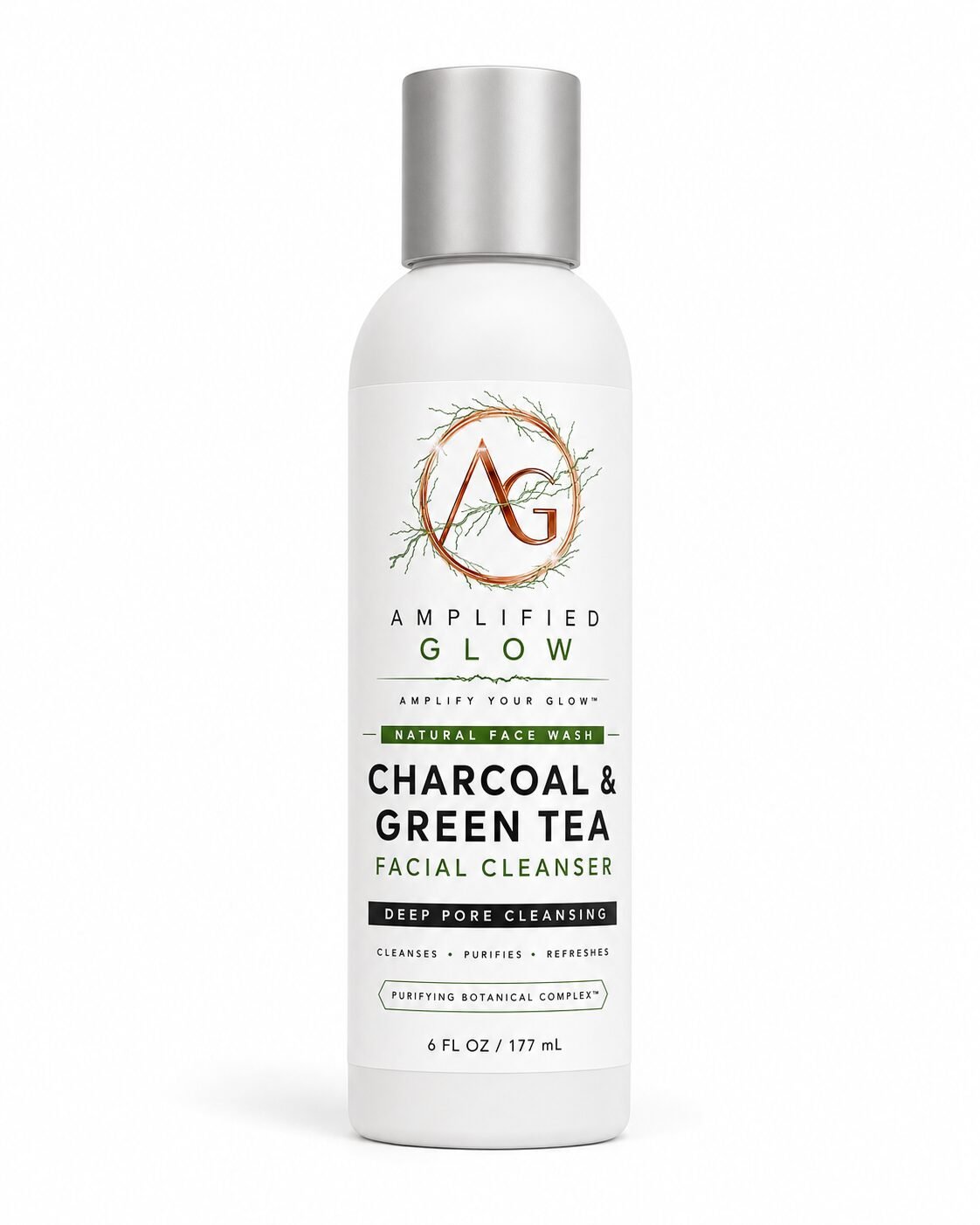
Amplified Glow Charcoal and Green Tea Facial Cleanser
A scented rinse-off face wash for the face and neck, to use morning and night. It rinses away daily buildup and excess surface oil. Its fragrance comes from parfum and orange peel oil.
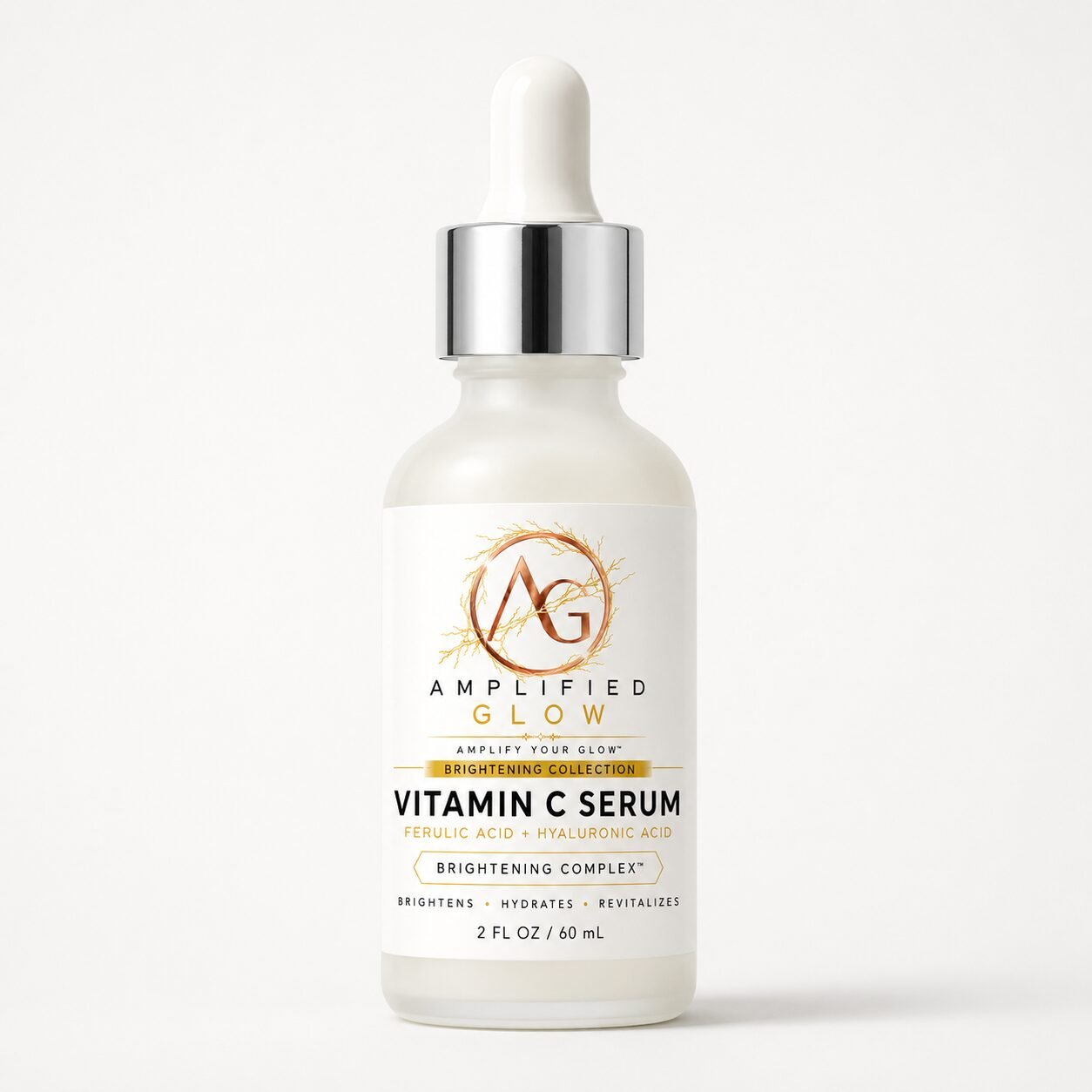
This serum is made for skin with a dull or uneven-looking tone. It combines sodium ascorbyl phosphate, a form of vitamin C, with ferulic acid, vitamin E and sodium hyaluronate. Apply it after cleansing and before moisturizer and sunscreen.
Keep using a separate broad-spectrum sunscreen as directed on its label.
Once your sunscreen plan is ready, you can plan the rest of your routine, such as cleansing, serum and moisturizer, around a separate sunscreen in the skincare routine builder. This step is optional, and your sunscreen plan works without it.
Shopping Cart
Manage Consent
To provide the best experiences, we use technologies like cookies to store and/or access device information. Consenting to these technologies will allow us to process data such as browsing behavior or unique IDs on this site. Not consenting or withdrawing consent, may adversely affect certain features and functions.
Functional
Always active
The technical storage or access is strictly necessary for the legitimate purpose of enabling the use of a specific service explicitly requested by the subscriber or user, or for the sole purpose of carrying out the transmission of a communication over an electronic communications network.
Preferences
The technical storage or access is necessary for the legitimate purpose of storing preferences that are not requested by the subscriber or user.
Statistics
The technical storage or access that is used exclusively for statistical purposes.The technical storage or access that is used exclusively for anonymous statistical purposes. Without a subpoena, voluntary compliance on the part of your Internet Service Provider, or additional records from a third party, information stored or retrieved for this purpose alone cannot usually be used to identify you.
Marketing
The technical storage or access is required to create user profiles to send advertising, or to track the user on a website or across several websites for similar marketing purposes.
I have very sensitive skin, so I’m always careful with cleansers. I really love this one because it cleans my skin deeply without making it feel dry or irritated. My face feels fresh, clean, and hydrated after using it. It’s honestly one of the few cleansers that works really well for my skin.
I’ve been really enjoying this serum. It’s lightweight, hydrates my skin, and gives it a nice glow without feeling heavy or sticky. My skin looks brighter and healthier since I started using it. Really happy with it!
I’ve always had problems with my hair falling a lot and my scalp feeling itchy. Since I started using this shampoo and conditioner, I haven’t had that same feeling. My hair feels softer, looks shinier, and it smells so good. I’m really happy with the results and would definitely recommend it!
My new favorite !!! Can’t live without it. Never thought I would trade in my Oribe… but yes ladies and gentlemen this peptide shampoo is superior. Even if you aren’t skilled at styling your hair will look sooooooo much better !!!! No more bas hair days … silky, smooth and it extends your hair wash day by a day or two !
Smooth, easy to style and you will get compliments. No matter where I went people asked me who my hair dresser is …. Pssst the only thing I changed was switching to this ! You’ll be impressed with your first wash.
This bottle will last you!!! It feels great and removes eye makeup nicely without any irritation. I am sensitive around my eyes and will say this makes a difference. You’ll notice the difference in your skin tone in just a few weeks
I usually buy Oribe… so that sets my standards pretty high. The first time I tried this I was blown away. It extended my hair wash by a day. Everyone I ran into asked if I had a professional blowout done and honestly I did my same routine as always. My hair was less frizzy, easier to style and looked like came out of a salon. Definitely better than Oribe when it comes to style and making your blowout last ;)
Shampoo/Conditioner have a light fresh scent . My hair is soft, static free, and much easier to manage! My scalp remains free of any dryness. I’m happy with my purchase.