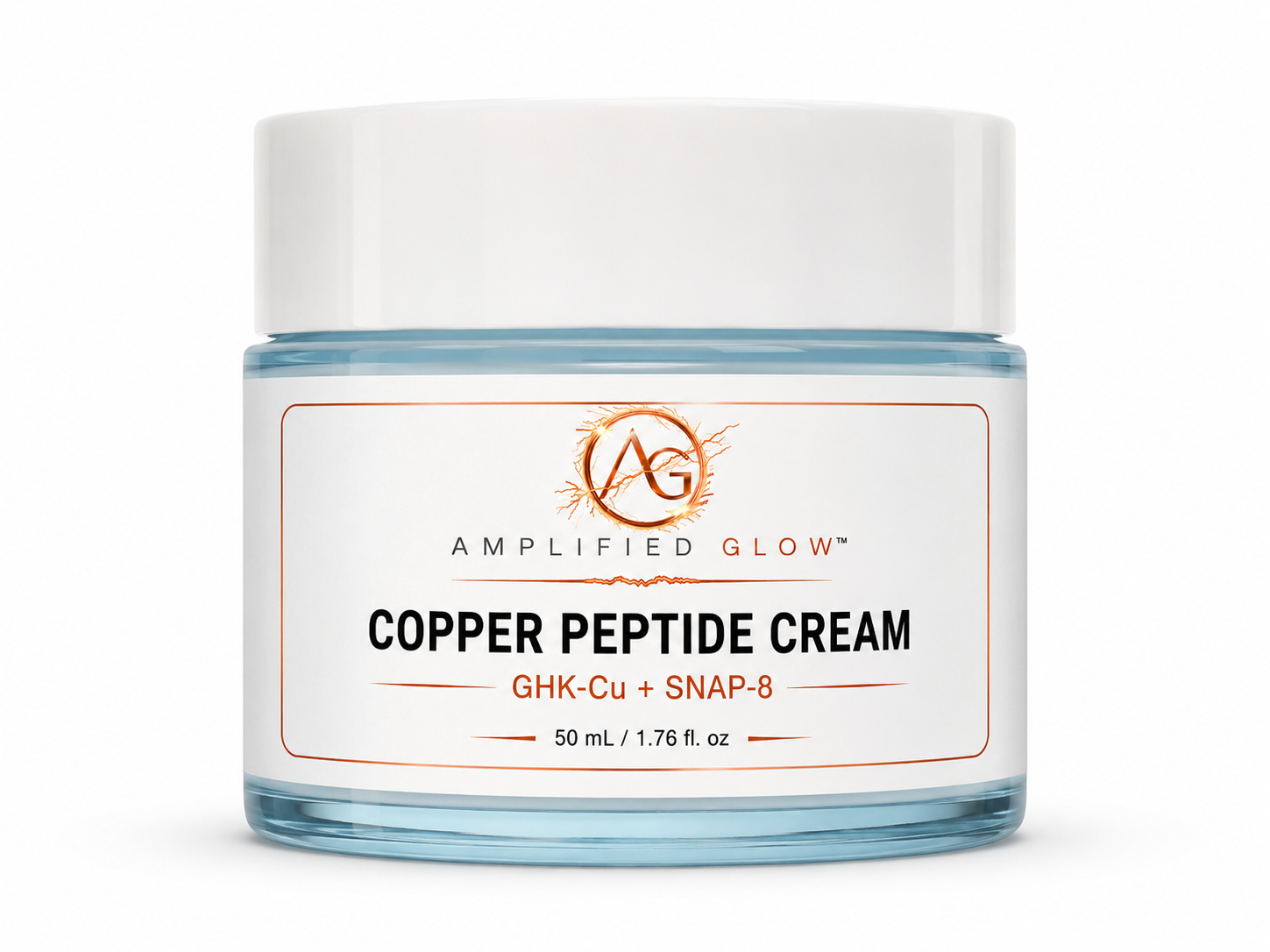
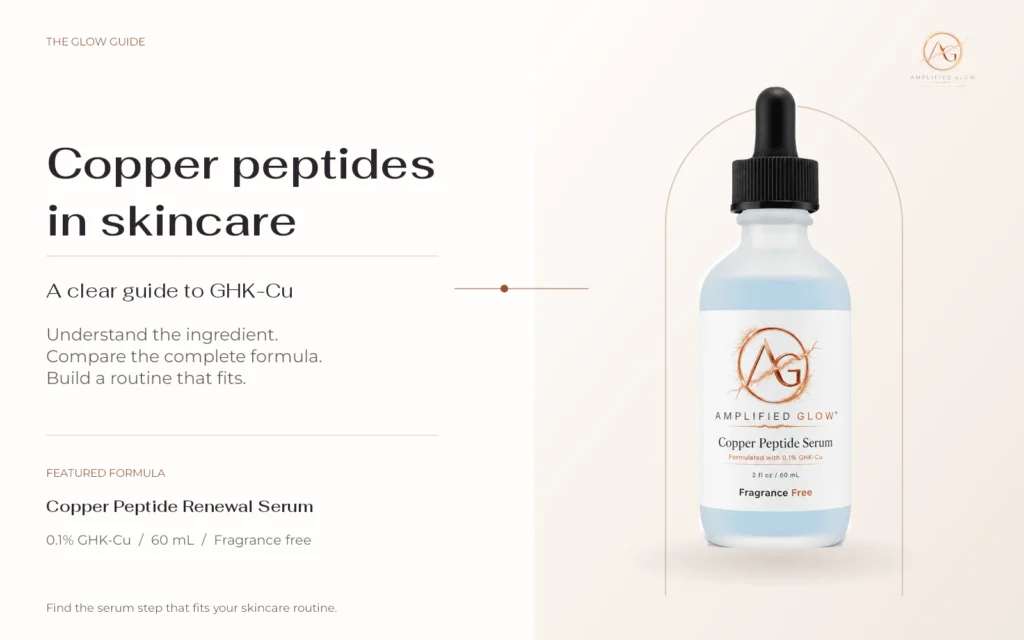
Copper peptides for skin have gone from a niche ingredient to a fixture on serum shelves, largely thanks to online interest in a specific complex called GHK-Cu. If you've seen a distinctly blue serum promising firmer-looking, more radiant skin, there's a good chance copper peptides were the headline ingredient.
Copper peptides are short chains of amino acids bound to a copper ion. In cosmetics, the most discussed version is Copper Tripeptide-1, commonly associated with GHK-Cu. This guide separates what the molecule is, what laboratory research explores, what limited human topical research has and hasn't shown, and what a realistic routine looks like — without the exaggerated anti-aging claims that circulate online.
In short: copper peptide formulas are generally chosen to support hydrated, smoother-looking, more radiant skin, but evidence for dramatic anti-aging outcomes is limited and formula-specific. Patch-test any new product and follow its directions.
What are copper peptides for skin?
Peptides, copper ions, and the GHK-Cu complex
A peptide is a short chain of amino acids — smaller than a full protein, but built from the same basic units. When a peptide binds to a copper ion, the result is called a copper peptide complex. The best-known example in skincare is GHK-Cu, a naturally occurring tripeptide-copper complex.
"Copper peptides" is a broader category than GHK-Cu alone. Other copper-peptide complexes exist in research settings — AHK-Cu, for instance, shows up in hair-focused laboratory studies rather than skin studies, which is worth knowing before assuming a hair-research finding applies to a face serum, or the reverse. For a closer look at the molecule itself, see what GHK-Cu is.
GHK-Cu vs Copper Tripeptide-1
On an ingredient label, GHK-Cu is usually listed under its INCI (International Nomenclature of Cosmetic Ingredients) name: Copper Tripeptide-1. The two terms describe the same complex — GHK-Cu is the common shorthand, and Copper Tripeptide-1 is what appears on regulatory ingredient lists. That said, not every copper-containing peptide discussed in the research literature is GHK-Cu; some studies test related but distinct complexes. When a claim traces back to a specific study, it's worth checking which exact molecule was tested rather than assuming the finding applies to every "copper peptide" product on the shelf.
Why are copper peptides used in cosmetic formulas?
Formulators reach for copper peptides mainly for a handful of cosmetic goals: a more hydrated feel, smoother-looking texture, added radiance, and a softer appearance of fine lines. These are appearance- and sensation-focused outcomes, not medical claims.
It's worth being clear about what actually drives a product's performance. A copper peptide is one ingredient in a much larger formula — the concentration used, the other actives and humectants included, how the formula is delivered to the skin, the packaging, and how consistently someone uses it all shape the real-world experience. Two products that both list "copper peptides" can behave quite differently depending on these factors.
That's the core distinction to keep in mind throughout this guide: ingredient theory describes what a molecule does in a lab setting, while a finished-product result depends on the complete formula. A serum performing well is not automatically proof that the copper peptide alone is responsible, and a study on the isolated ingredient doesn't guarantee a specific retail product will replicate it.
What does the research actually show?
Evidence about copper peptides exists at several different levels, and each level answers a different question.
| Evidence type | What it can tell us | What it cannot prove |
|---|---|---|
| Laboratory/mechanistic | Possible biological interactions worth studying further | That a retail serum produces the same outcome on a person |
| Human topical study | Outcomes under that specific study's exact formula and conditions | That every GHK-Cu product performs identically |
| Product-specific cosmetic testing | Results for that finished product and protocol | Universal results for every user |
One small randomized human study, using blinded evaluators, looked at a topical copper tripeptide complex (GHK-Cu) used after CO2 laser skin resurfacing. Thirteen patients completed the study. Computer analysis and blinded evaluators found no statistically significant difference in erythema (redness) resolution, and objective evaluation found no significant improvement in wrinkles or overall skin quality compared with the control regimen. However, patient-reported satisfaction was significantly higher among those using the GHK-Cu regimen.[1]
That combination of results — no significant objective difference, but higher subjective satisfaction — is a reason to stay measured about copper peptides rather than a basis for sweeping anti-aging promises. It's also important to note what this study does not cover: it was conducted in a post-laser-resurfacing context, on a specific regimen, in a small group of patients. It says nothing about applying a retail copper peptide serum to skin that has recently undergone a professional treatment, and it shouldn't be read as a recommendation to do so. If you've recently had a procedure, follow your provider's aftercare instructions rather than general skincare advice.
What are the benefits of copper peptides for skin?
Based on how copper peptide formulas are typically positioned and used, here's what a realistic set of expectations looks like:
Hydration and a softer skin feel. Many copper peptide serums are paired with humectants like hyaluronic acid, which is largely what drives the hydrated, plumper feel people notice.
Smoother-looking texture. Consistent use of a well-formulated serum, alongside the rest of a routine, is commonly associated with skin that looks and feels smoother.
A more refreshed or radiant-looking complexion. This is a sensory and visual outcome — skin that looks less dull or tired — rather than a claim about changing skin's underlying structure.
A softer appearance of fine lines. "Softer appearance" is intentionally modest phrasing. It describes how skin can look with consistent hydration and texture support, not a guarantee that lines will be erased.
None of these outcomes should be read as evidence that copper peptides trigger a specific biological process in a finished cosmetic product. They describe the kind of appearance- and feel-based results a reasonable user might notice, which is a different claim than a clinical or medical one.
Copper peptide serum vs cream: which format fits your routine?
Both formats can contain copper peptides; the difference is mostly about texture, layering, and how the product fits into a routine.
| Comparison point | Serum | Cream |
|---|---|---|
| Texture | Lightweight, often water- or gel-based | Richer, more emollient |
| Typical place in routine | Applied after cleansing, before moisturizer | Often used as the moisturizing step itself |
| Best fit for layering | Layers easily under other products | Usually the last step before sunscreen |
| Moisture/occlusiveness | Generally lighter, less occlusive | Generally more occlusive, better for locking in moisture |
| When a user might choose it | Wants a targeted, layerable step | Wants hydration and a copper peptide in one step |
A serum isn't automatically "stronger" than a cream, and a cream isn't automatically more nourishing — that depends on the complete formula, not the format alone. Some people use a copper peptide serum and a separate moisturizer; others prefer a single copper peptide cream that combines both functions. Either can fit a routine well — compare Amplified Glow's copper peptide face creams if you'd rather build your routine around the cream step.
How to use a copper peptide serum
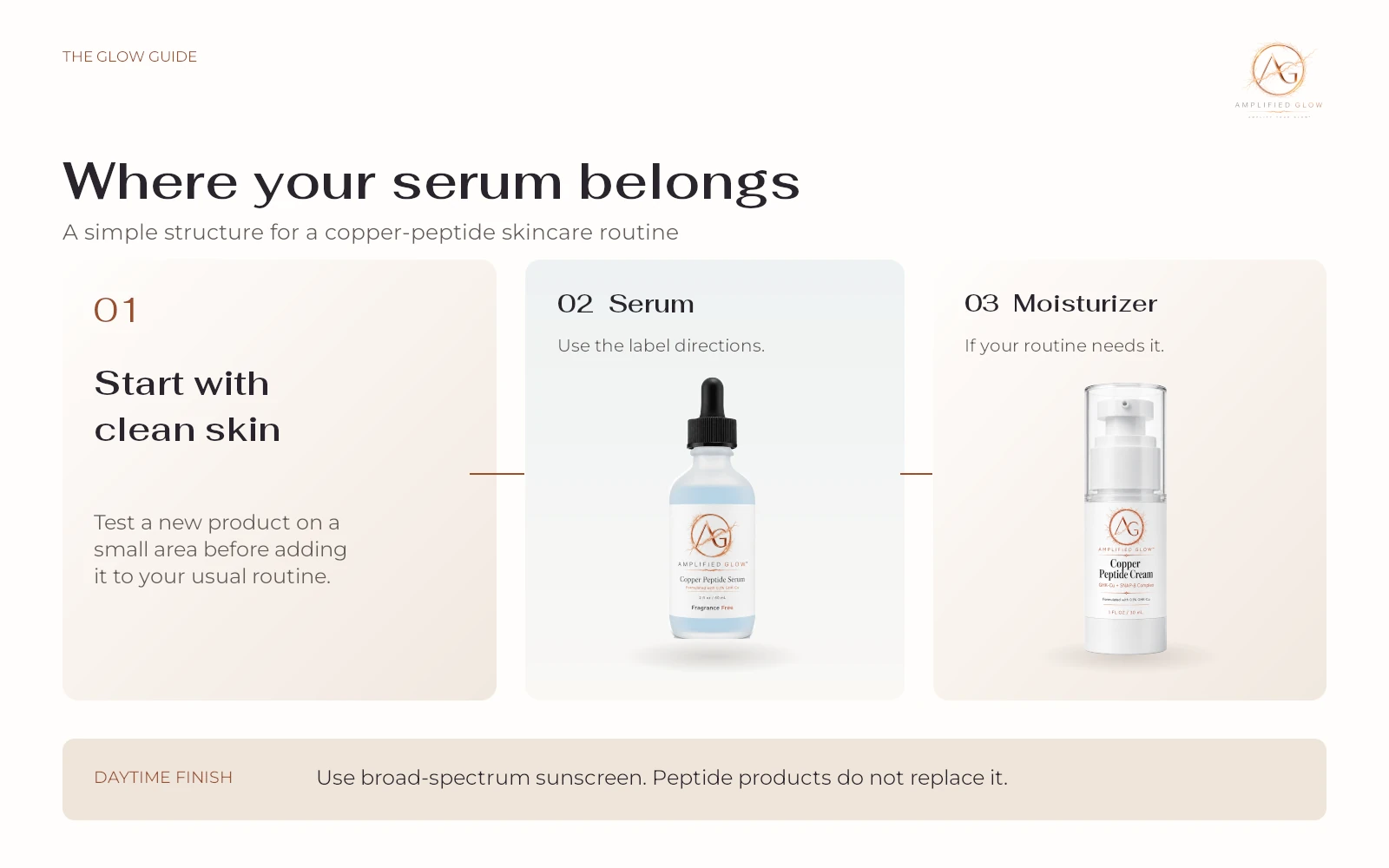
A simple, practical routine looks like this:
- Test a new product before adding it to your routine. The American Academy of Dermatology recommends testing on a small area twice daily for seven to ten days. Follow product-specific instructions and stop if a reaction occurs. Read its skin-care product testing guidance.
- Cleanse and gently pat skin dry. Follow the formula's directions for application to clean skin.
- Use the amount and frequency on the label. Directions differ between products.
- Spread gently and let the product settle. Follow the product's directions rather than imposing an arbitrary waiting time.
- Follow with moisturizer if needed. Choose a moisturizing step that fits your routine.
- Use broad-spectrum sunscreen during the day. Copper peptide cosmetics are not a substitute for sunscreen.
On the common question of before or after moisturizer: light, water-based serums are typically used before a heavier moisturizer, as a common layering sequence. That said, the product's own directions take priority over any general rule.
What can copper peptides be used with?
| Ingredient or step | General routine approach | Qualification |
|---|---|---|
| Hyaluronic acid | Commonly layered together for hydration | Check the complete formulas involved, not just the headline ingredients |
| Moisturizer | Normally follows a lighter serum | Follow the specific product's directions |
| Sunscreen | Final daytime step | Copper peptides do not replace sunscreen |
| Retinoids | Can be introduced cautiously, or alternated on different days if skin feels sensitive | Tolerance and formulas vary from person to person |
| Exfoliating acids | Avoid stacking multiple potentially irritating actives at once | Not a universal chemical "ban" — it's about overall routine load |
| Vitamin C | See copper peptides vs vitamin C for a full comparison | Vitamin C form and the complete formulation both matter |
A quick note on absolutes: broad claims like "never combine X and Y" are common online but rarely hold up as universal rules. The absence of a warning is not proof that every pairing has been tested. Check the directions for both products, introduce one new formula at a time, and ask the manufacturers if compatibility is unclear.
How to choose a copper peptide product
A short checklist can make comparison shopping easier:
- A complete ingredient list and clear directions — not just a headline claim.
- The exact peptide identified, ideally by its INCI name (such as Copper Tripeptide-1), so you know what you're actually buying.
- A format that fits your routine — serum, cream, or both.
- Fragrance preference and any known sensitivities.
- Supporting hydrators and emollients in the full formula, not just the copper peptide.
- Responsible, appearance-focused claims rather than promises of guaranteed or dramatic transformation.
- Suitable packaging and storage instructions, as directed by the manufacturer.
- No promises of injections, tissue healing, disease treatment, or guaranteed age reversal. Topical cosmetic copper peptides are a different category from injectable or compounded products, and this guide covers cosmetic use only.
For a practical label-reading checklist, see how to choose a GHK-Cu serum. It explains what to check when comparing ingredient names, concentration claims and complete formulas.
How Amplified Glow's copper peptide serums fit
Two of the GHK-Cu face serums in Amplified Glow's collection offer different stated concentrations and supporting formulas.
The fragrance-free copper peptide serum is a 2 fl oz / 60 mL formula listing 0.1% GHK-Cu alongside dual hyaluronic acid (sodium hyaluronate and hydrolyzed hyaluronic acid), Palmitoyl Tripeptide-1, jojoba oil, coconut oil, and green tea extract. Its product page directs applying a small amount to clean face and neck twice daily, followed by moisturizer if desired.
The multi-peptide serum with GHK-Cu and SNAP-8 is a fragrance-free 1 fl oz / 30 mL formula listing 0.15% GHK-Cu together with SNAP-8, sodium hyaluronate, and a botanical extract blend. Its directions call for 2–3 drops on clean skin morning and evening or as desired, followed by moisturizer and daytime sunscreen.
Formula facts and directions can change, so always check the current product page before purchasing or applying a routine based on a listed concentration. Neither serum is positioned to treat a skin condition — both are cosmetic products intended to support smoother-looking, more hydrated, more radiant-looking skin as part of a daily routine.
Related copper peptide guides
Peptide serum vs peptide cream — compare texture and routine placement.
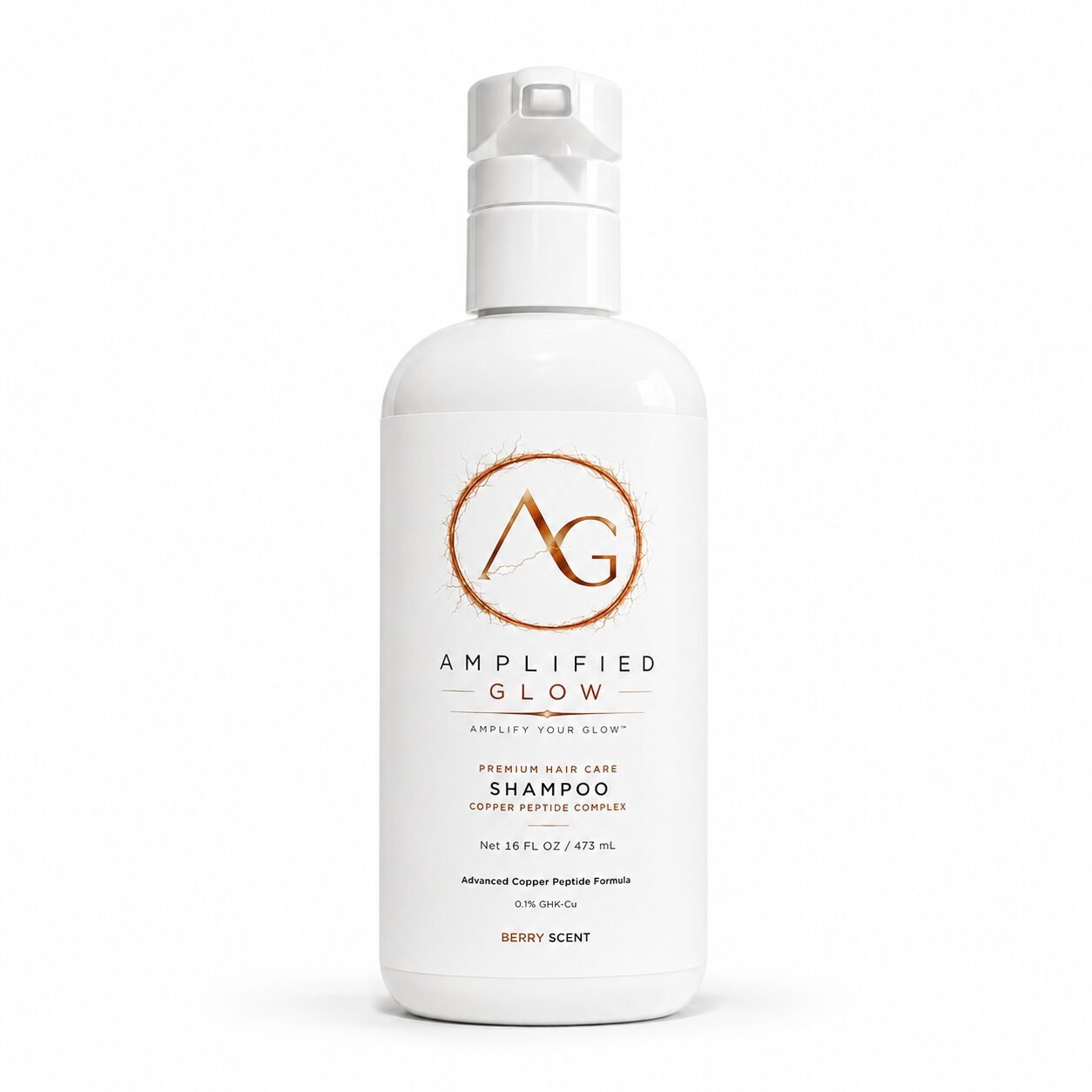
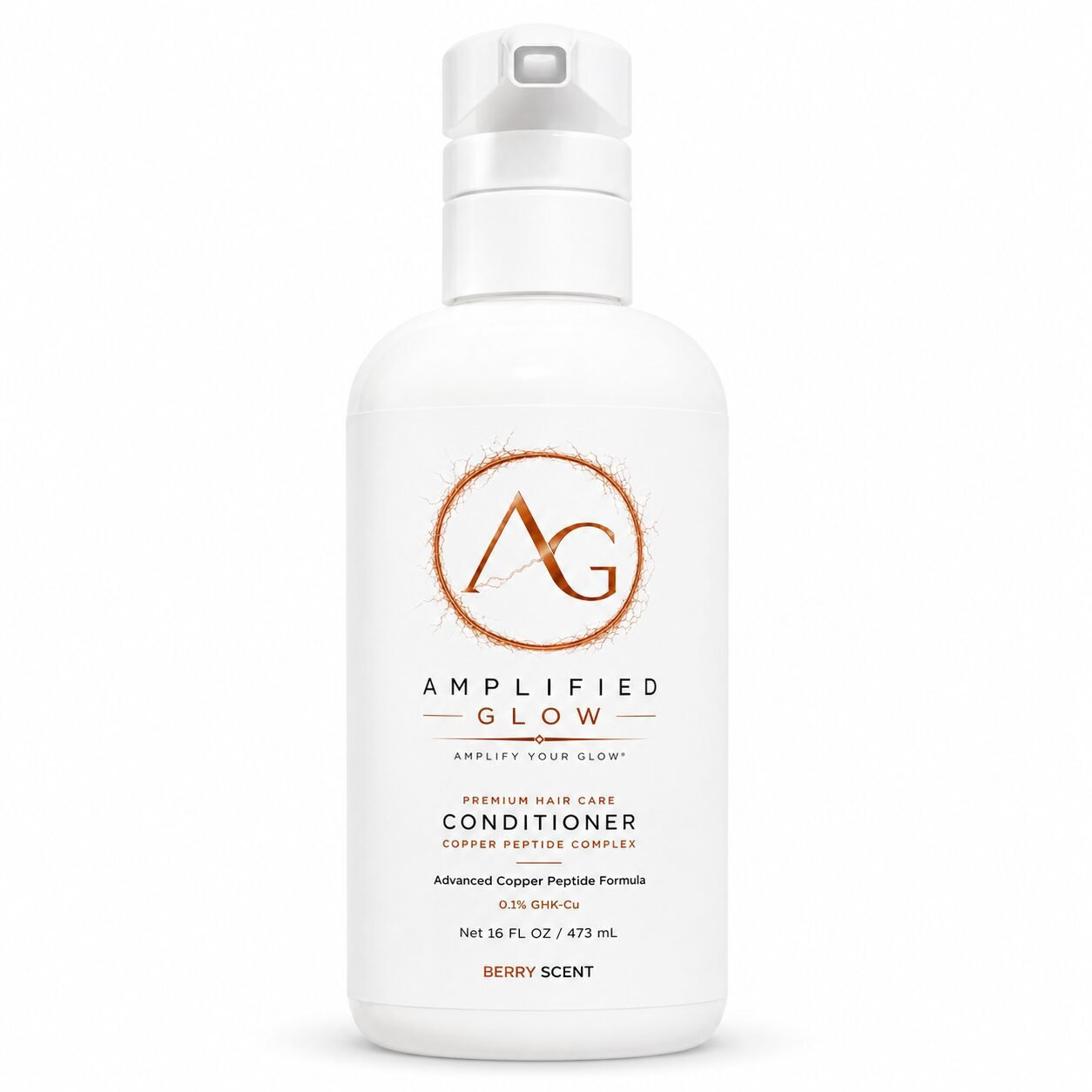
Copper peptides in haircare — how the same ingredient family is used in shampoo and conditioner, and why skin and hair claims should stay separate.
Copper peptides vs vitamin C — a side-by-side comparison and simple routines for using one or both.
What GHK-Cu is — a closer look at the molecule itself.
Frequently asked questions
Can beginners use copper peptides?
Yes. Copper peptide serums are generally formulated for everyday cosmetic use. As with any new active ingredient, patch-test first, introduce it gradually, and follow the product's specific directions rather than a generic routine.
Can copper peptides be used every day?
Many copper peptide products are designed for daily or twice-daily use, but this depends on the specific formula. Check the product label, and reduce frequency or stop if your skin feels irritated.
Do copper peptides go before or after moisturizer?
Light, water-based copper peptide serums are typically applied before moisturizer, as a common layering sequence. Always defer to the individual product's stated directions if they differ.
Can copper peptides be used with hyaluronic acid?
Yes, this is a common pairing — hyaluronic acid is a humectant that supports hydration, while copper peptides are often included for texture and radiance. Check the complete formulas rather than assuming compatibility from ingredient names alone.
Can copper peptides be used with retinoids?
Potentially, though tolerance varies. Some people introduce them on alternating days or at different times of day (for example, retinoid at night, copper peptide serum at another time) if their skin is sensitive. There's no universal rule requiring separation.
For the broader ingredient comparison and product-specific pairing checks, see retinol vs peptides.
Can copper peptides be used with vitamin C?
Often, yes, though the specific vitamin C form and both complete formulas matter. See copper peptides vs vitamin C for a fuller comparison and sample routines.
Why are some copper peptide products blue?
The blue color typically comes from the copper peptide complex itself and, in some formulas, from added colorants such as methylene blue. Color alone cannot verify concentration, potency or freshness. Follow storage instructions and contact the seller about unexpected changes in color, smell or texture.
How long does it take to notice cosmetic changes?
This varies by person and depends on the formula, your skin's baseline condition, and how consistently the product is used. There's no universal timeline, and claims of a fixed number of days or weeks for guaranteed results should be treated with skepticism.
A note on cosmetic claims
Amplified Glow's copper peptide serums are cosmetic products intended for external use. Cosmetics generally do not require FDA premarket approval, although color additives are an exception, and they are not intended to diagnose, treat, cure, or prevent any disease.[2][3] If you have a persistent skin concern or a medical question, a board-certified dermatologist is the right resource — this guide covers general cosmetic education, not personalized medical advice.
Conclusion
GHK-Cu has been studied in laboratory and human settings, but evidence for a finished cosmetic product must be assessed separately. The small post-laser study discussed here found higher patient satisfaction without significant differences in the objective outcomes measured. A practical approach is to follow the label, test new products before routine use, and keep expectations focused on the look and feel of skin rather than dramatic transformation.
If you're deciding how copper peptides fit alongside another popular active, the copper peptides vs vitamin C comparison is the natural next stop. Or, if you'd like to browse formulas directly, Amplified Glow's face serum collection includes both peptide and vitamin C options.
References
- Miller TR, Wagner JD, Baack BR, Eisbach KJ. Effects of Topical Copper Tripeptide Complex on CO2 Laser–Resurfaced Skin. Archives of Facial Plastic Surgery. 2006;8(4):252–259. PubMed
- U.S. Food and Drug Administration. Is It a Cosmetic, a Drug, or Both? (Or Is It Soap?)
- U.S. Food and Drug Administration. Is It Really "FDA Approved"?