Skip to content
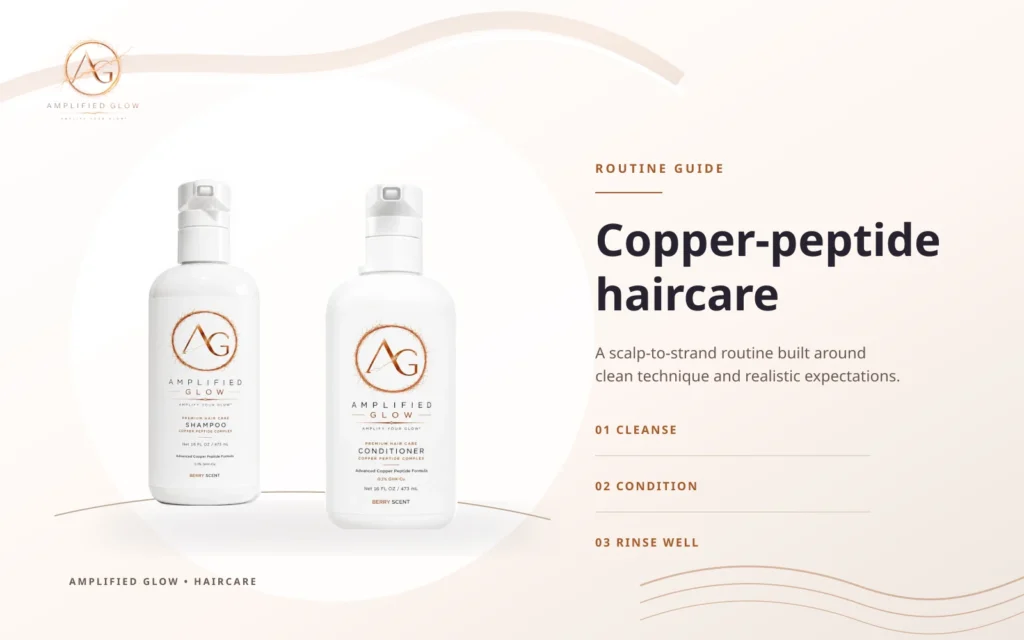
A copper peptide haircare routine can be simple: thoroughly wet the hair, cleanse the scalp and hair with shampoo, rinse, apply conditioner mainly through the mid-lengths and ends according to the label, rinse again, and style as usual. Adjust frequency to oil, buildup, hair texture, and scalp comfort. This is cosmetic wash-day guidance, aimed at the practical side of a copper peptide shampoo-and-conditioner routine — for the underlying research on copper peptides and hair, see the copper peptides in haircare evidence guide rather than expecting a full research review here.
The routine at a glance
- Detangle gently before washing, if that's appropriate for your hair type.
- Saturate hair and scalp thoroughly with lukewarm water.
- Apply shampoo and focus cleansing where oil and buildup collect.
- Rinse thoroughly.
- Apply conditioner to mid-lengths and ends, unless your specific product's label says otherwise.
- Leave the conditioner on only for the labeled time — don't invent an extra "activation" period.
- Rinse and style as usual.
Step 1 — choose the right formula family
| Choice | Berry | Lavender |
|---|---|---|
| Listed GHK-Cu | 0.1% | 0.15% |
| Scent direction | Berry | Lavender |
| Shampoo highlights | Sodium hyaluronate, sea kelp extract, rosemary extract | Keratin, niacinamide, creatine, sodium hyaluronate, royal jelly extract, lavender extract |
| Conditioner highlights | Keratin, niacinamide, panthenol, sodium hyaluronate, rosemary and green tea extract | Keratin, niacinamide, panthenol, squalane, creatine, sodium hyaluronate, aloe vera, lavender extract |
A higher listed GHK-Cu percentage doesn't automatically make one line "better" — the complete formula, your scent preference, your hair's needs, and your own tolerance matter more than the number alone.
Step 2 — shampoo the scalp and hair
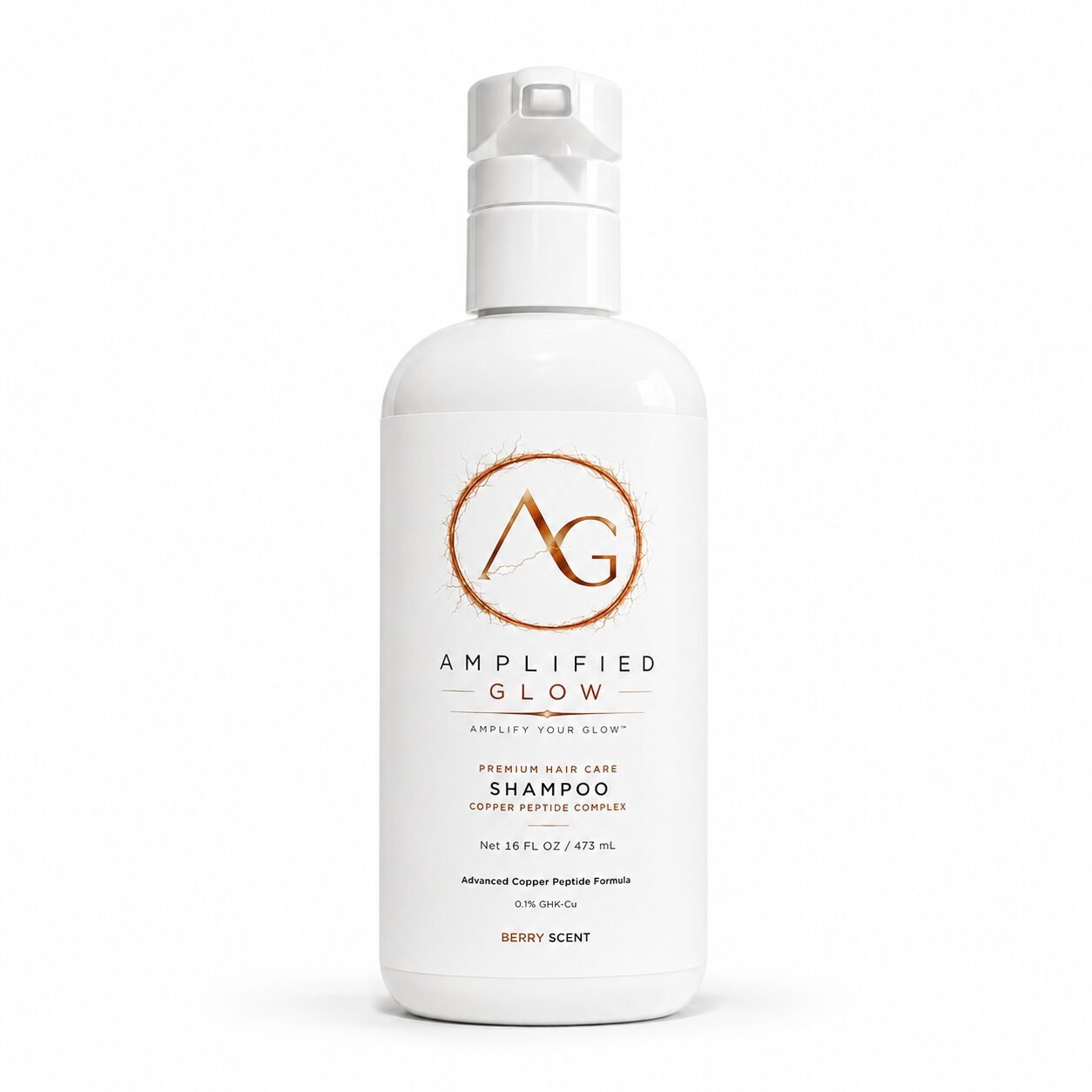
Compare the copper peptide shampoo collection if you are choosing between the Berry and Lavender cleansing formulas.
Fully wet your hair before applying anything — shampoo generally lathers and distributes more evenly on thoroughly saturated hair than on hair that's only partly wet. Use the amount stated on the label rather than a generic "coin-sized" rule, since directions vary by formula and by hair length. Massage gently with your fingertips — not your nails — focusing on the scalp and any areas prone to buildup, while letting the lather move naturally through the lengths as you rinse rather than scrubbing the ends directly, which are usually the driest and most fragile part of the hair.
One cleanse is often enough. A second shampooing pass depends on your own buildup, styling product use, and the product's directions, rather than a universal rule that applies to everyone — someone using heavy styling products or exercising daily may find a second, lighter pass genuinely helps, while someone with dry or fine hair may find it unnecessary or even drying. Rinse completely before moving to conditioner, since leftover shampoo residue can make hair feel coated rather than clean.
Step 3 — condition the lengths and ends
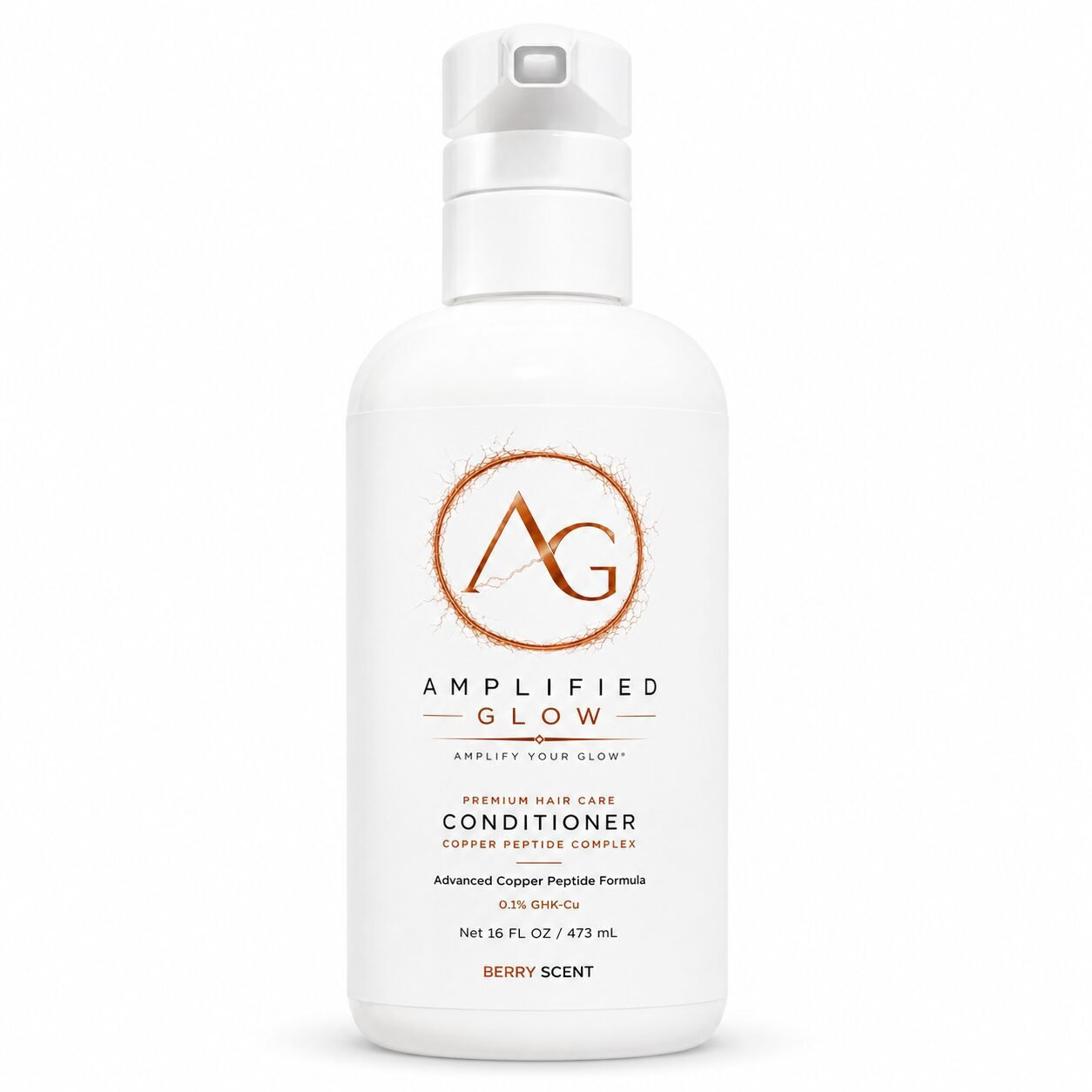
Use the copper peptide conditioner collection to compare the complete conditioning formulas before choosing this step.
Conditioner does a different job than shampoo: rather than cleansing, it's focused on improving feel, softness, and manageability, primarily for the mid-lengths and ends where hair tends to be driest and has been exposed to the most styling and environmental wear over time. Apply it there as the default, unless your specific product's label directs otherwise, and avoid applying a heavy conditioner directly at the scalp unless the product is specifically designed for that, since it can leave finer hair looking weighed down or greasy at the roots.
Follow the labeled dwell time for your product — for example, use a stated two-to-three-minute leave-in time only for the specific product that calls for it, and only if that's still the current label direction. There's no benefit to leaving a rinse-off conditioner on longer than directed; it won't "absorb more" by sitting for extra time, and can just mean more product left on the hair when you rinse. Detangle gently while the conditioner is in, since the slip it provides can make a wide-tooth comb or your fingers easier to work through knots than on dry or freshly shampooed hair, then rinse thoroughly.
How often should you use the routine?
There's no single washing schedule that fits every hair type. Instead, use this as a starting framework:
- More frequent cleansing may suit oily scalps, heavy sweating, or frequent styling-product buildup.
- Less frequent cleansing may suit dry-feeling hair or a low-buildup routine.
- Curly and coily hair often benefits from extra attention to moisture retention and gentle detangling, which may mean less frequent shampooing paired with more conditioning.
- Color-treated hair should follow both your colorist's guidance and the current product label together.
- Reduce frequency or stop use if you notice tightness, itching, redness, or other irritation.
Most people land somewhere between washing every day and washing two or three times a week. There's no single number that's correct for everyone, and it's reasonable to adjust seasonally — many people shampoo more often in hot, humid weather or after increased exercise, and less often when the scalp feels drier, such as in winter.
Adjusting the routine by hair need
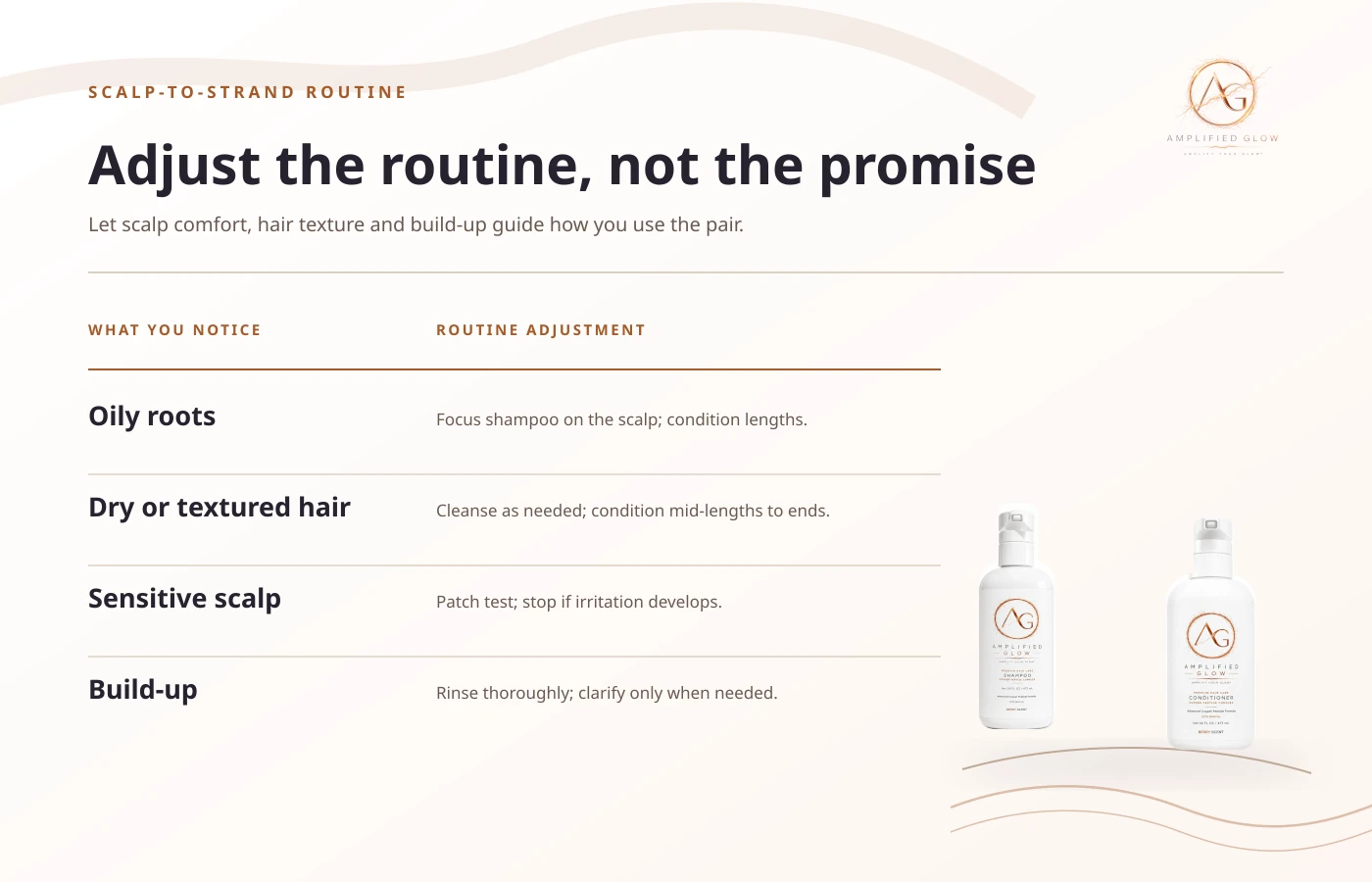
The basic wet-cleanse-condition-rinse sequence stays the same regardless of hair type; what usually changes is where you focus product, how much you use, and how often you repeat the whole routine. Use the table below as a starting point for your own hair.
| Hair or scalp need | What to focus on |
|---|---|
| Fine or easily weighed-down hair | Use conditioner mainly on ends; avoid over-applying near the scalp |
| Dry or rough-feeling lengths | Focus conditioner on mid-lengths to ends; consider the fuller dwell time if your product allows it |
| Wavy, curly, or coily hair | Prioritize gentle detangling and moisture; adjust wash frequency to avoid over-drying |
| Color-treated hair | Follow colorist guidance alongside the current product label; avoid unnecessary over-washing |
| Buildup-prone scalp | Focus shampoo massage on the scalp; a second cleanse may help depending on your routine |
| Fragrance-sensitive user | Review the complete ingredient list on both scent families before choosing |
These are starting points, not guarantees of suitability for every user — review the full ingredient list and consider your own known sensitivities regardless of which adjustment applies to you.
What results are realistic?
A reasonable way to evaluate the routine is by:
- How clean the scalp and hair feel after rinsing.
- Softness and slip while the hair is wet or drying.
- Ease of detangling.
- Smoothness and manageability once styled.
- Whether the scent and overall experience are enjoyable.
- Whether the scalp feels comfortable, rather than tight or irritated.
This routine is not evaluated by reduced shedding, follicle repair, hair regrowth, increased density, or faster growth — those are not realistic or supported metrics for a cosmetic rinse-off routine. If those are your main concerns, a rinse-off shampoo and conditioner routine isn't designed to address them, and a conversation with a dermatologist is a more appropriate next step than expecting a wash-day change to solve them.
What current hair research cannot prove
The most frequently cited hair-specific study for copper peptides used AHK-Cu, not GHK-Cu, and tested isolated human hair follicles ex vivo alongside cultured dermal papilla cells in vitro — not a clinical trial of a rinse-off GHK-Cu shampoo or conditioner. That distinction matters: this research cannot substantiate hair-growth claims for the shampoo-and-conditioner routine described here. For the fuller evidence picture, see the copper peptides in haircare guide.
Build an Amplified Glow wash-day routine
Choose your scent family and shop the coordinated pair, or mix individual steps if that better fits your routine:
- Copper Peptide Strengthening Shampoo – Berry
- Copper Peptide Nourishing Conditioner – Berry
- Copper Peptide Strengthening Shampoo – Lavender
- Copper Peptide Nourishing Conditioner – Lavender
- If you need both steps, compare The Glow Hair Stack: Berry shampoo and conditioner duo with The Lavender Glow Hair Stack. Browse the haircare bundles collection for current set details.
Frequently asked questions
Should copper peptide shampoo go mainly on the scalp?
Yes — shampoo's cleansing job is centered on the scalp and roots, where oil and buildup accumulate, with lather then moving naturally through the lengths.
Should copper peptide conditioner go on the scalp or the ends?
Mid-lengths and ends are the default focus for these conditioners, unless your specific product's label directs otherwise.
How often can the routine be used?
It depends on your scalp oiliness, styling habits, and hair texture rather than one fixed schedule — start with your normal washing frequency and adjust based on how your hair and scalp respond.
Do I need matching shampoo and conditioner?
Not strictly, but a matching pair is formulated to work together as a coordinated routine, which is a reasonable default if you're unsure.
Can Berry shampoo be used with Lavender conditioner?
Yes, products can be mixed across the two scent families if you prefer — just be aware you'll get a blend of both scent profiles rather than one consistent scent.
Is the routine suitable for color-treated hair?
The product pages describe these formulas as suitable for color-treated hair, but pair that with your colorist's specific guidance and your own observation of how your color responds.
Does copper peptide shampoo regrow hair?
No. This is a cosmetic rinse-off routine focused on cleansing, softness, and manageability, not a hair-regrowth treatment. See the copper peptides in haircare guide for the full evidence picture.
When should someone speak to a dermatologist about scalp or hair-loss concerns?
If you notice sudden, patchy, or persistent hair loss, ongoing scalp irritation, or other concerning symptoms, that's a conversation for a dermatologist rather than something to address through a cosmetic wash-day routine alone.
Conclusion
A copper peptide wash-day routine comes down to a simple, repeatable sequence: wet, cleanse, rinse, condition the lengths and ends, rinse, style — adjusted for your specific hair type and how your scalp responds. For the deeper evidence review behind the ingredient itself, see the copper peptides in haircare guide. Ready to build your routine? Compare the Berry and Lavender pairs and pick the scent and formula that fits.
References
This is a procedural routine guide rather than an evidence review; for the underlying research on copper peptides and hair, see the References section of the copper peptides in haircare guide.