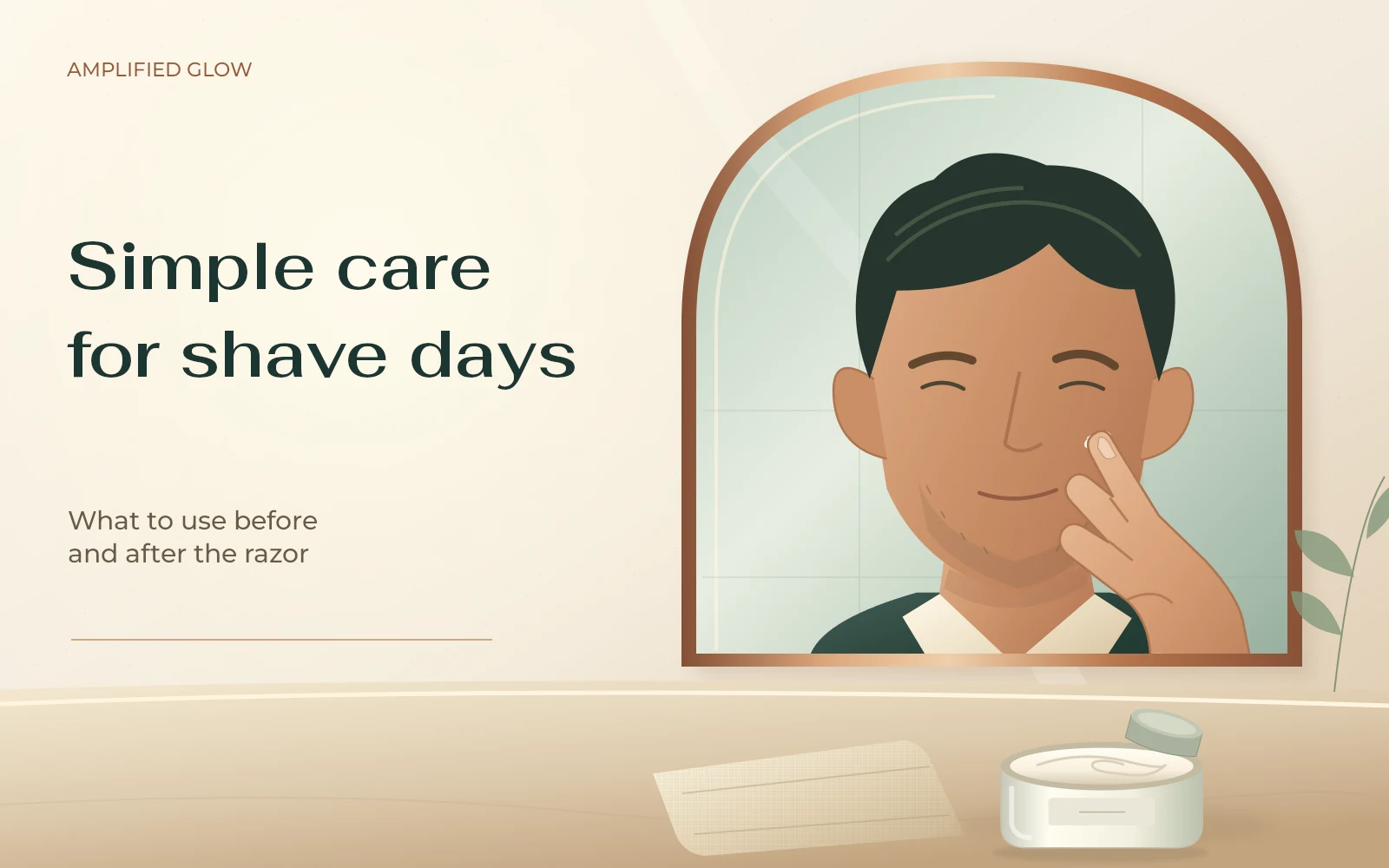
On a shave day, wash your face first. Then wet your skin and facial hair, apply a shaving cream or gel, and shave. Rinse away what’s left, apply a moisturizer the way its label directs, and finish with sunscreen before you head outdoors. On days you don’t shave, skip the shave prep, the shaving cream or gel, the razor and the post-shave rinse. You still wash your face and rinse off the cleanser, then moisturize and add sunscreen before going out. You don’t need to follow any set shaving schedule. This guide explains what each step does, where it goes, and which extra layers you can leave on the shelf.
Your routine at a glance
Daily facial care comes down to a few jobs: cleaning your skin, keeping it hydrated, and protecting it from the sun. The American Academy of Dermatology’s skin care tips for men are built around those same three things: a cleanser, a moisturizer and sun protection. On the days you shave, shaving goes in the middle.
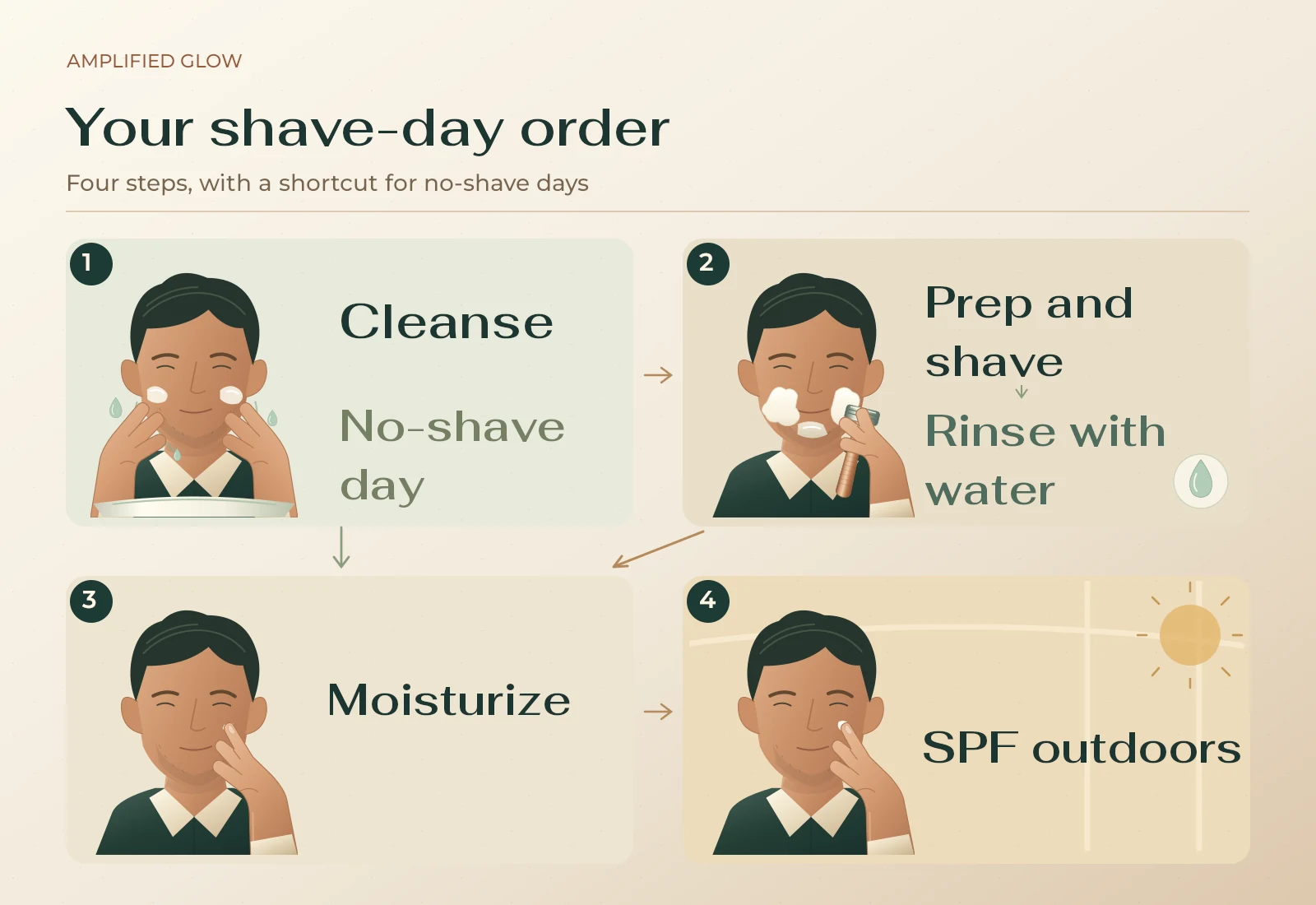
| Step | Shave day | No-shave day |
|---|---|---|
| Cleanse | Wash with a face cleanser and rinse | Same |
| Prepare and shave | Wet skin and hair, apply shaving cream or gel, shave | Skip |
| Post-shave rinse | Rinse off leftover shaving cream with water | Skip |
| Moisturize | Apply a moisturizer as its label directs | Same |
| Sun protection | Sunscreen before going outdoors in the daytime | Same |
The rinse after shaving uses water only. It clears away leftover shaving cream and hair. It isn’t a second full wash, so if you cleansed before you shaved, you don’t need to lather up with cleanser again.
Shave-day routine, step by step
- Cleanse. The AAD’s razor bump prevention tips include washing before you shave and rinsing afterward. Use your usual face wash as directed and rinse it off.
- Soften and lather. Wet your skin and facial hair to soften them. Right after a shower is a convenient time. Then apply a shaving cream or gel, as the AAD’s shaving guidance recommends. If your skin is very dry or sensitive, look for one labeled for sensitive skin. Use a product made for shaving at this step, not your face moisturizer.
- Shave gently. Shave in the direction your hair grows and rinse the razor after each swipe. Swap disposable blades regularly (the AAD suggests after five to seven shaves) and store your razor somewhere dry. If bumps keep coming back, the AAD’s razor bump guidance also suggests three changes: don’t press hard, don’t pull the skin taut, and don’t aim for the closest possible shave.
- Rinse. Splash off leftover shaving cream and hair with water. Then pat your face gently, leaving it slightly damp if your moisturizer’s label allows.
- Moisturize. The AAD’s general advice for men is to apply moisturizer while skin is still damp after bathing or shaving. Individual products can give different directions, so follow the label on the one you use.
- Add sunscreen if you’re going outside. The AAD’s general sunscreen advice is to apply sunscreen after your other skincare and before you go out. For time outdoors, the AAD’s sunscreen application guidance recommends a broad-spectrum, water-resistant sunscreen with SPF 30 or higher on exposed skin. Reapply it every two hours, and after swimming or sweating. Follow your sunscreen’s label for how much to use and when to apply it.
Organize your morning and evening steps with our skincare routine builder. For the sunscreen step, use the sunscreen calculator to estimate face and body amounts, trip supplies and how long a bottle may last.
Aftershave balm or moisturizer: do you need both?
“Aftershave” doesn’t describe a single type of formula. Products sold under that name are made for different purposes, so the name alone won’t tell you what a product does. Before buying, check the label for three things: what the product is meant to do, when to apply it, and which skin it’s made for.
If your aftershave balm is designed to moisturize and you follow it with a separate moisturizer, you may be doing the same job twice. How two layers feel is individual: some people are comfortable with both, while others prefer just one. If you’d rather simplify, pick the one product you find comfortable for that step. This is only a way to cut duplicate layers. It doesn’t mean every balm and moisturizer are interchangeable.
Razor bumps are a different situation. For bumps, the AAD recommends an aftershave formulated to soothe skin. An everyday moisturizer isn’t a substitute for a specially formulated or prescribed product. If an aftershave burns or stings, the AAD’s advice on razor bumps is to stop using it and try another. If bumps persist after you’ve changed your shaving technique, see a dermatologist.
Choosing products for the skin you actually have
The AAD recommends choosing products by skin type and reading labels. A few common situations:
- Dry cheeks, oilier forehead and nose. This mix can point to combination skin, which helps narrow down cleansers and moisturizers. After washing, your face should feel clean and comfortable, not tight.
- Skin that reacts easily. Look for mild, fragrance-free products. “Unscented” isn’t the same as fragrance-free.
- Breakout-prone skin. Check labels for oil-free or non-comedogenic claims.
- Bold labels. A headline ingredient or a “for men” label doesn’t tell you whether a product will suit you. The full ingredient list and the directions tell you more, as does how your skin has reacted to similar formulas before.
Extras are optional. According to the AAD, exfoliation isn’t for everyone. Whether and how to do it depends on your skin type and what else you use, because products such as retinoids or benzoyl peroxide can affect how much your skin tolerates. Never exfoliate cut, wounded or sunburned skin, and don’t overdo it. The same thinking applies to serums, toners and eye creams. Add one when you have a specific reason, not because a routine chart includes it.
Optional: two everyday products from Amplified Glow
If you need a cleanser or a moisturizer, these two products are options for everyday care. Use each one according to its own directions. Neither is a shaving product, and neither replaces sunscreen.
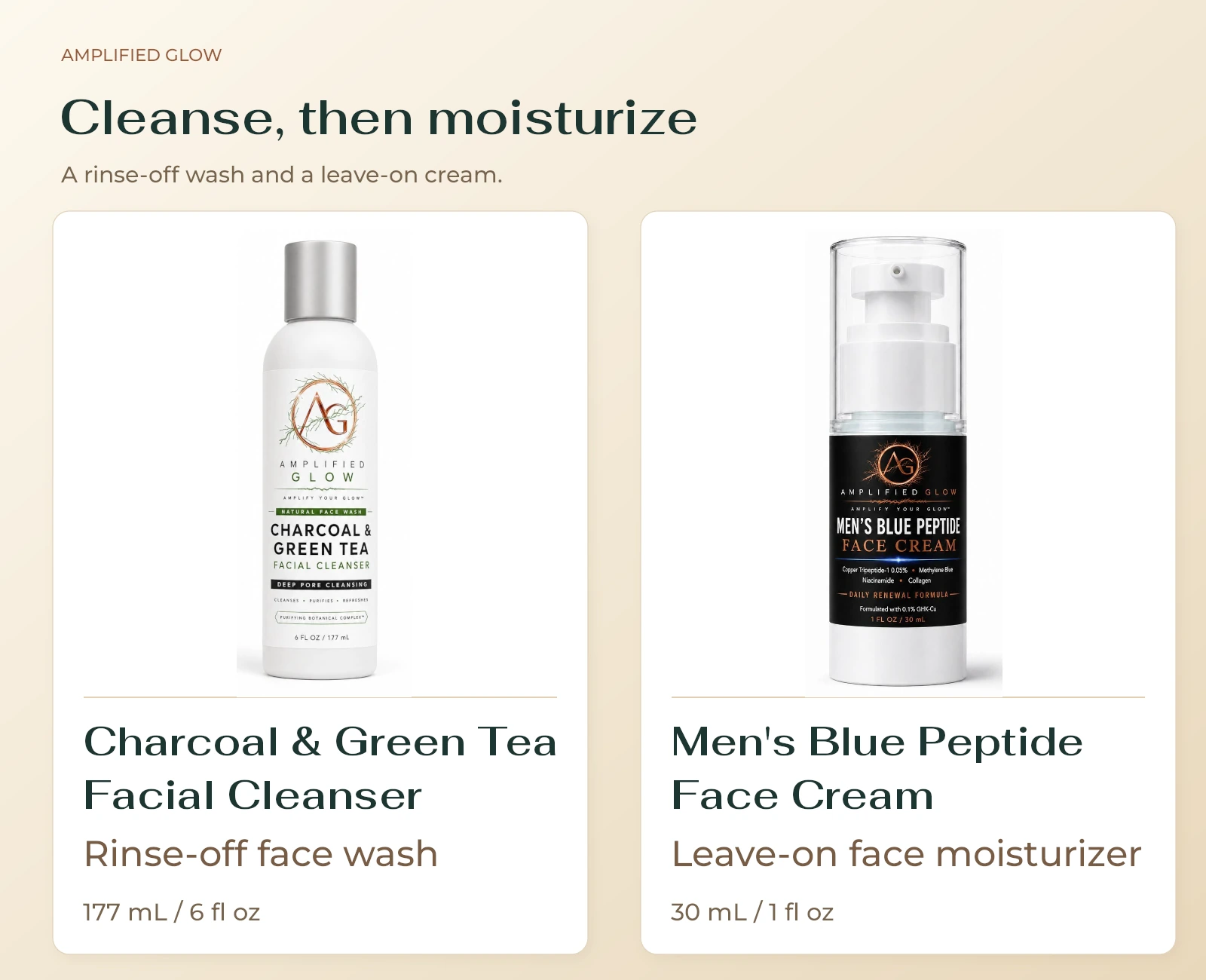
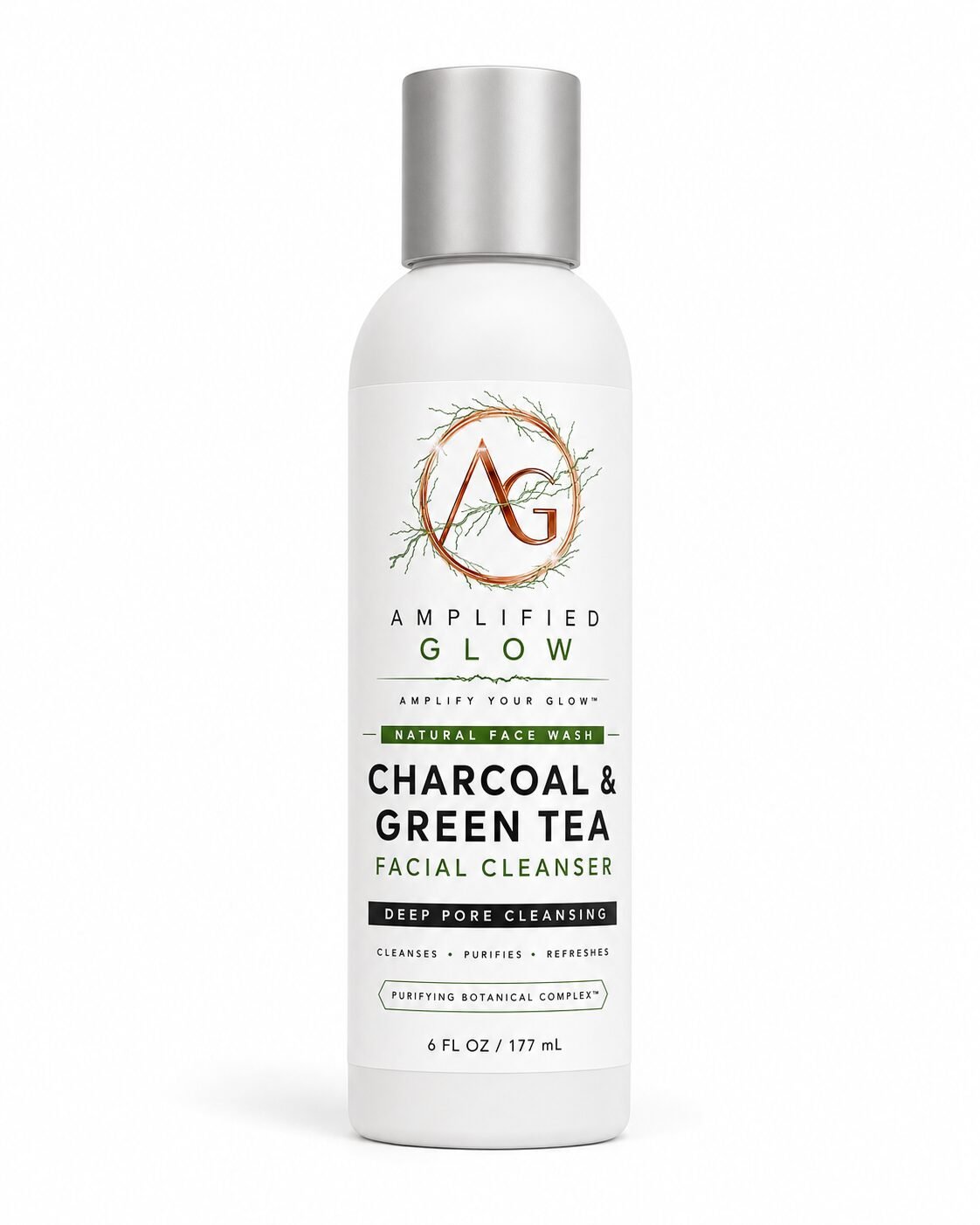
Charcoal and Green Tea Facial Cleanser
This is a rinse-off wash for the face and neck (6 fl oz / 177 mL) made for normal, combination and oily skin. To use it:
- Wet your face and neck.
- Work a small amount into wet hands.
- Massage it gently onto your face and neck in circles, keeping it away from your eyes.
- Rinse with warm, not hot, water and pat dry.
Use it morning and night. The label lists fragrance (parfum) and orange peel oil, so the formula is scented. If fragrance bothers your skin, choose a fragrance-free cleanser instead. Stop using it if irritation occurs.
View the Charcoal and Green Tea Facial Cleanser
Men’s Blue Peptide Face Cream
This is a leave-on moisturizer for the face and neck (1 fl oz / 30 mL), made for skin that feels dry or looks dull. It helps skin feel hydrated and soft and look smoother. The ingredients include Copper Tripeptide-1, niacinamide and sodium hyaluronate, plus coconut, pomegranate seed and borage seed oils. That means it isn’t oil-free. It has no SPF.
Its directions differ from the general damp-skin advice above:
- Cleanse, then pat dry so your skin is clean and dry.
- Apply a small amount to your face and neck, avoiding the eye area.
- Massage it in gently until absorbed.
Use it in the morning, the evening or both. The label recommends a patch test before first use and says to stop if irritation occurs. It’s an everyday moisturizer, not an aftershave or a post-shave treatment.
View the Blue Peptide Face Cream
Quick questions
Should I do this routine in the morning or at night?
You can cleanse and moisturize in the morning, at night or both. Follow each product’s label. Sunscreen is the daytime step, applied before you go outdoors. Shave whenever it fits your day, and keep the steps in the same order.
How often should I shave?
There’s no required schedule. Shave as often as suits your look and your skin. On the days in between, cleanse and moisturize, and add sunscreen when you’re heading outside.
Can my face moisturizer replace shaving cream or sunscreen?
Not by default. Shaving cream or gel is made to prepare skin and hair for the razor. A moisturizer without SPF on its label isn’t sun protection, and an SPF number alone doesn’t tell you a product is enough for time outdoors. For that, the AAD’s sunscreen guidance recommends broad-spectrum, water-resistant protection with SPF 30 or higher. Use a product made for each job.