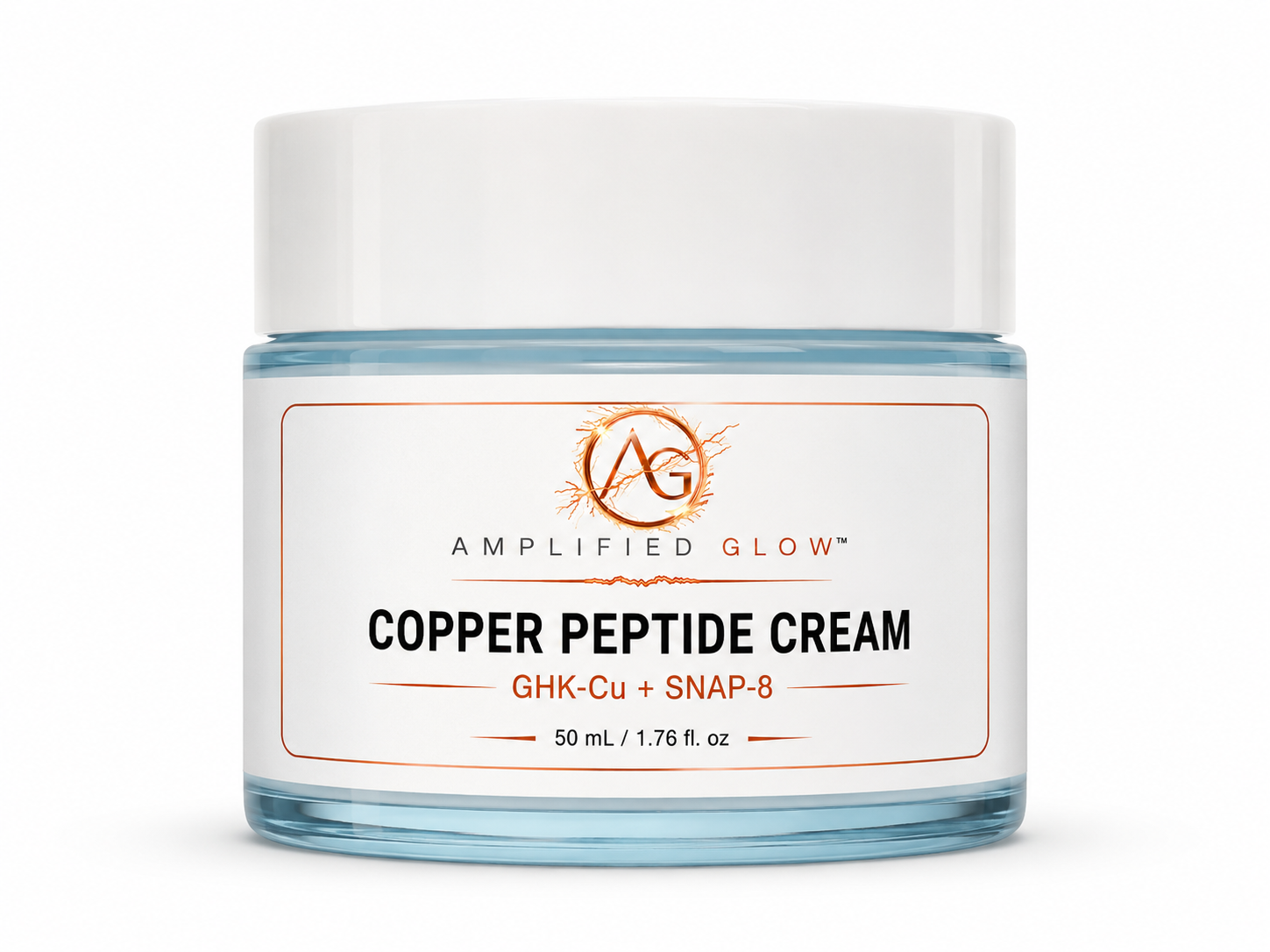
SNAP-8 is a synthetic peptide, commonly identified on ingredient labels as Acetyl Octapeptide-3, used in products marketed for the visible appearance of expression lines. It's built around a proposed mechanism related to muscle-contraction signaling — but a proposed mechanism and a registered trademark don't establish how well any particular finished serum or cream actually performs. A topical SNAP-8 cosmetic is not an injectable treatment and should not be expected to deliver equivalent results.
What is SNAP-8?
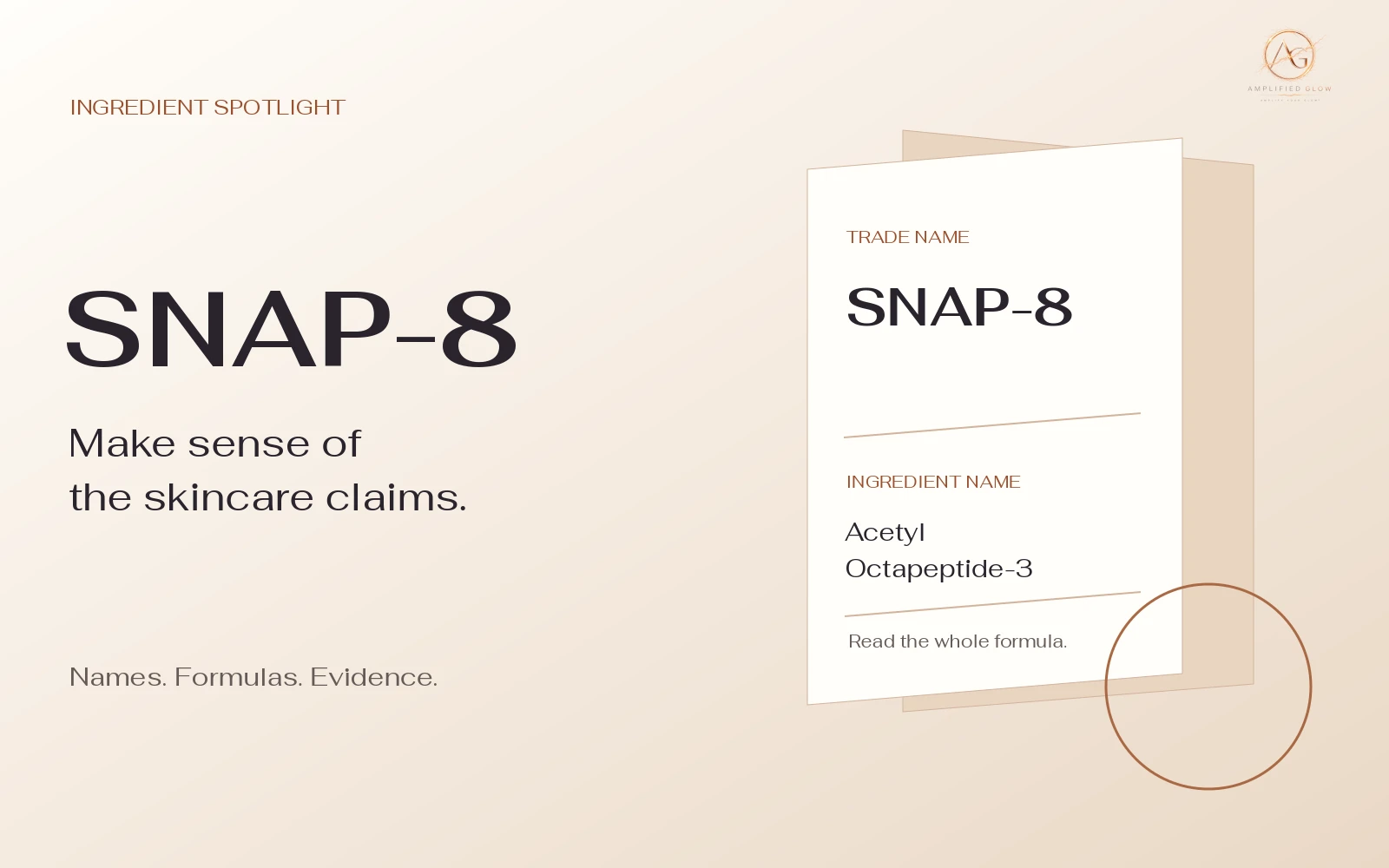
"SNAP-8" is a trade name. On an ingredient label, the same complex is generally identified as Acetyl Octapeptide-3 — that's the INCI (International Nomenclature of Cosmetic Ingredients) name associated with it in Lubrizol’s supplier storefront. A finished product is a third, separate thing again: whatever the trade name or INCI name, the finished serum or cream also depends on its complete formula, concentration, and directions.
Older marketing material and some product listings use naming that doesn't cleanly match this convention, which is part of why label-reading matters more than a trade name alone. An acetyl-prefixed peptide with a different number in its name — Acetyl Hexapeptide, for example — is not automatically the same ingredient as Acetyl Octapeptide-3, even when the two show up side by side in a single product's marketing copy. Treating similar-sounding acetyl-peptide names as interchangeable is a common source of confusion, and it's worth resolving with a current label or the brand directly rather than assuming.
SNAP-8, Argireline, and GHK-Cu are different names for different ingredients
| Term | Label name / source | Why confusing the names changes how evidence should be read |
|---|---|---|
| SNAP-8 | Commonly Acetyl Octapeptide-3 | An eight-amino-acid peptide; research on it shouldn't be assumed to apply to related but different peptides |
| Argireline | Acetyl Hexapeptide-8 in the supplier listing | A six-amino-acid peptide, developed earlier than SNAP-8; a different molecule, not simply an older name for the same one |
| GHK-Cu | Commonly Copper Tripeptide-1 | A copper-bound tripeptide with a different chemical identity from SNAP-8 and Argireline |
These three names get grouped together constantly in casual "peptide skincare" discussion, but they're not interchangeable, and evidence about one doesn't transfer to another. For the fuller comparison between SNAP-8 and GHK-Cu specifically — including how their proposed cosmetic roles differ — see GHK-Cu vs SNAP-8.
What does the evidence actually test?
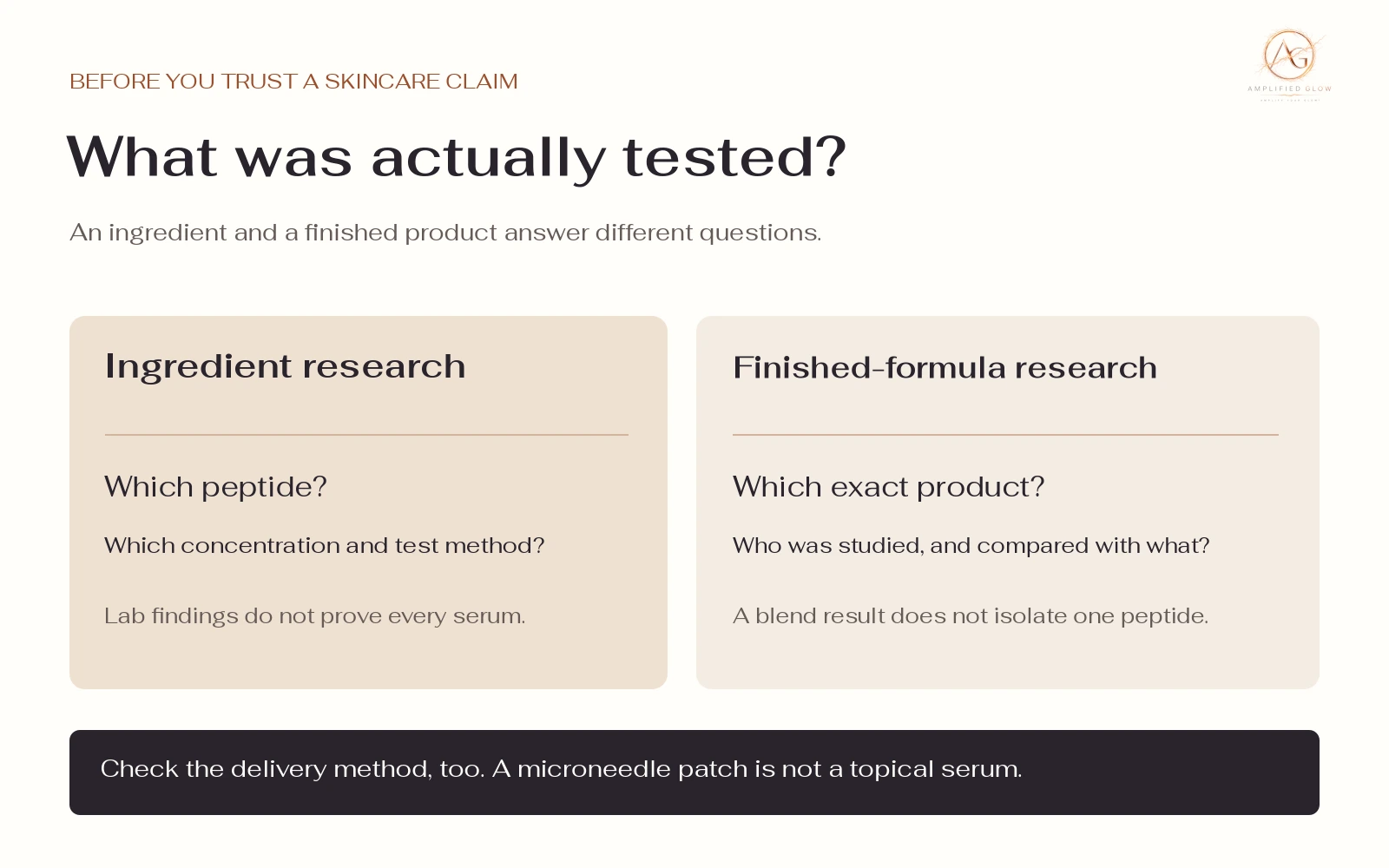
Evidence connected to SNAP-8 shows up in a few different forms, and they're not interchangeable either: data an ingredient supplier provides about SNAP-8 itself, studies of a multi-ingredient cosmetic serum that happens to include a peptide from this family, and research using entirely different delivery formats like dissolving microneedle patches. None of these is automatically wrong to reference — but each answers a narrower question than "does SNAP-8 work," and it's worth knowing which one you're looking at.
Why results from a blend cannot be assigned to one peptide
A study published in the January 2023 issue of the Journal of Cosmetic Dermatology evaluated a proprietary serum containing peptides and other ingredients. It included ex vivo skin testing and a 12-week clinical study, with participants compared against their own baseline rather than a separate clinical placebo group. The researchers reported improvements in several measures of skin appearance and hydration.
All four authors disclosed employment with Colgate-Palmolive, and the paper states that Colgate-Palmolive and PCA SKIN funded the research. The findings concern the tested formula as a whole: they do not isolate SNAP-8’s effect or establish how an unrelated serum performs.
Delivery format adds another limitation. A 2024 study compared a dissolving microneedle patch containing acetyl octapeptide-3, a vitamin C derivative and sodium cyclic lysophosphatidic acid with a hyaluronic-acid-only patch in 24 adults over 28 days. The patches were applied to opposite eye areas; four authors listed affiliations with the patch company, Raphas.
A microneedle patch creates tiny channels in the skin’s outer layer. A standard leave-on serum does not. This study therefore cannot establish the performance of an ordinary topical SNAP-8 serum: both the ingredient combination and delivery method differ.
Why a proposed mechanism is not Botox equivalence
Supplier literature describes a proposed effect on the protein machinery involved in neurotransmitter release and muscle-contraction signaling. That proposed pathway helps explain the marketing comparison, but it does not demonstrate Botox-equivalent clinical results. But a topically applied cosmetic peptide and an injected prescription neuromodulator are different in route, dose, regulatory status, and depth of effect. This guide isn't a substitute for medical information about injectable treatments, and it doesn't suggest a topical product achieves the same result.
How to check a SNAP-8 product label
- The exact ingredient listing — Acetyl Octapeptide-3 or the specific name the brand uses, confirmed against the current label rather than a marketing headline.
- Current directions for that specific product, not a generic assumption based on similar products.
- The other ingredients in the formula, since supporting hydrators and the base formula shape most of what you'll actually notice day to day.
- The percentage basis, if a concentration is stated — what it's measured against matters as much as the number itself.
- Whether any specific claim is backed by evidence on the actual formula in front of you, rather than a general peptide claim borrowed from a different product or ingredient.
If a product's own materials seem to conflict — two similar peptide names listed without explanation, for instance — the reliable next step is asking the brand directly, not assuming either name is wrong. A short ingredient-highlights list also isn't proof that anything not mentioned is absent from the full formula.
Where does a finished serum or cream fit?
A SNAP-8-containing product fits into a routine the same way any serum or cream does: follow that specific product's own directions for amount, frequency, and placement relative to cleansing and moisturizing. There's no universal mixing or compatibility chart that applies to every SNAP-8 formula alongside every other active ingredient — introduce anything new gradually, and see peptide serum vs peptide cream if you're deciding between formats rather than ingredients.
Frequently asked questions
Is SNAP-8 the same as GHK-Cu?
No. SNAP-8 is a synthetic peptide unrelated to copper binding, while GHK-Cu is a copper-bound tripeptide. They're both marketed in the "anti-aging peptide" space, but they're chemically different ingredients with different proposed roles.
Is SNAP-8 the same as Argireline?
No. SNAP-8 was developed as a related, extended concept, but the two are different INCI ingredients — Acetyl Octapeptide-3 versus commonly Acetyl Hexapeptide-8. Treat them as related history, not identical formulas.
Does a study of a peptide blend prove the effect of SNAP-8 alone?
No. A multi-ingredient formula's results reflect the whole blend, not any single peptide within it, especially when other active ingredients or delivery methods (like a microneedle patch rather than a standard topical serum) are also involved.
How do I check which peptide is in a serum?
Look for the full INCI ingredient list on the current label or product page, not just a trade name or a marketing callout. If the naming seems to conflict or is unclear, ask the brand directly rather than assuming.
Does a topical peptide work like an injectable treatment?
No. A cosmetic peptide applied to the skin's surface is a different route, dose, and regulatory category from an injected prescription neuromodulator. Don't treat "inspired by a similar mechanism" as equivalent to the same clinical effect.
References
-
Moy M, Diaz I, Lesniak E, Giancola G. Peptide-Pro Complex Serum: Investigating Effects on Aged Skin. Journal of Cosmetic Dermatology. 2023;22(1):267–274. PubMed — funded by, and authored by employees of, the company that manufactures the tested product line.
-
Clinical Safety and Efficacy Evaluation of a Dissolving Microneedle Patch Having Dual Anti-Wrinkle Effects With Safe and Long-Term Activities. Annals of Dermatology. 2024. Journal article — a microneedle-patch delivery study, not a topical serum trial.
-
For the underlying GHK-Cu vs. SNAP-8 identity and evidence comparison, see the References section of GHK-Cu vs SNAP-8.
-
Lubrizol. SNAP-8 peptide solution C supplier listing. Used for ingredient identity and the supplier’s proposed mechanism, not as independent proof of finished-product efficacy.
-
Lubrizol. Argireline YOUth peptide ingredient listing. Used to distinguish the ingredient name.