Fine hair can still need conditioner. What matters is where it goes.
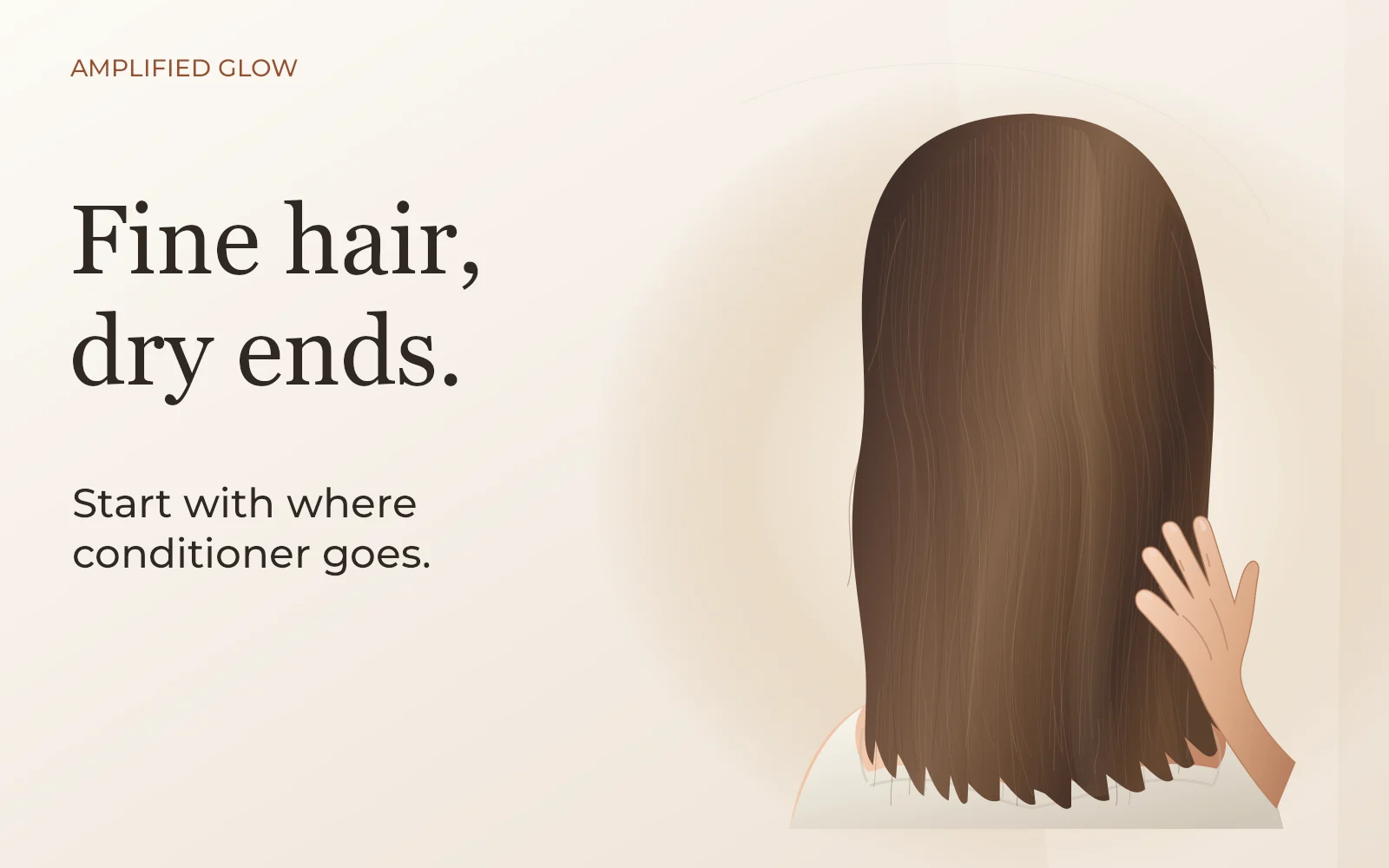
Shampoo is meant for the scalp. Conditioner comes after, and for fine or straight hair, dermatologists suggest concentrating it on the ends (AAD). With a rinse-out conditioner, that means:
- applying it to clean, wet mid-lengths and ends
- leaving it for the time on the label (2–3 minutes for the two Amplified Glow conditioners)
- rinsing it out thoroughly
If your ends still feel rough or your roots still look flat after that, the next move is one targeted check, not another product.
Jump to what you're seeing:
- Both problems at once? Check application first
- Roots still flat or greasy? Go to the roots checks
- Ends still dry or rough? Go to the ends checks
Start with what your roots and ends are doing
Flat or greasy-looking roots and rough ends are two separate observations, and they can easily happen on the same head. Oily roots aren't a reason to skip conditioning your ends. Dry ends aren't a reason to put conditioner near your scalp.
It also helps to know what conditioner is for. Cosmetically, it reduces friction and makes hair easier to comb and handle (Hair Cosmetics review). That's useful for fine hair too, as long as the conditioner lands in the right place.
| What you notice | First thing to check |
|---|---|
| Roots flat, ends feel fine | Keep conditioner strictly on the ends, and look at any styling products you put near the scalp |
| Roots flat, ends rough | Placement first: is conditioner staying on mid-lengths and ends, and is it rinsing out fully? Then look at how you handle your ends |
| Roots fine, ends rough | Whether the ends get even coverage and the full label time, then friction and heat habits |
Check application before changing conditioner
Before you buy something new, make sure the one you have is being used the way its label intends.
- Confirm it's a rinse-out conditioner. Both Amplified Glow conditioners are rinse-out products that follow shampoo. Shampoo with the focus on your scalp, then rinse.
- Apply it to clean, wet mid-lengths and ends. Smooth it gently down the lengths. Don't work it into the scalp, lather it at the roots or force it through knots.
- Follow the bottle for amount. Neither Amplified Glow label gives a number of pumps or a measured amount. Use enough to cover the mid-lengths and ends evenly, and make a rough note of what you used so you can adjust one thing at a time.
- Leave it on for the time its label gives (2–3 minutes for both Amplified Glow conditioners), then rinse thoroughly. Other rinse-out conditioners can list a different time, so check your bottle. A thorough rinse doesn't mean scrubbing until your hair squeaks, since conditioned hair is meant to feel a little smoother.
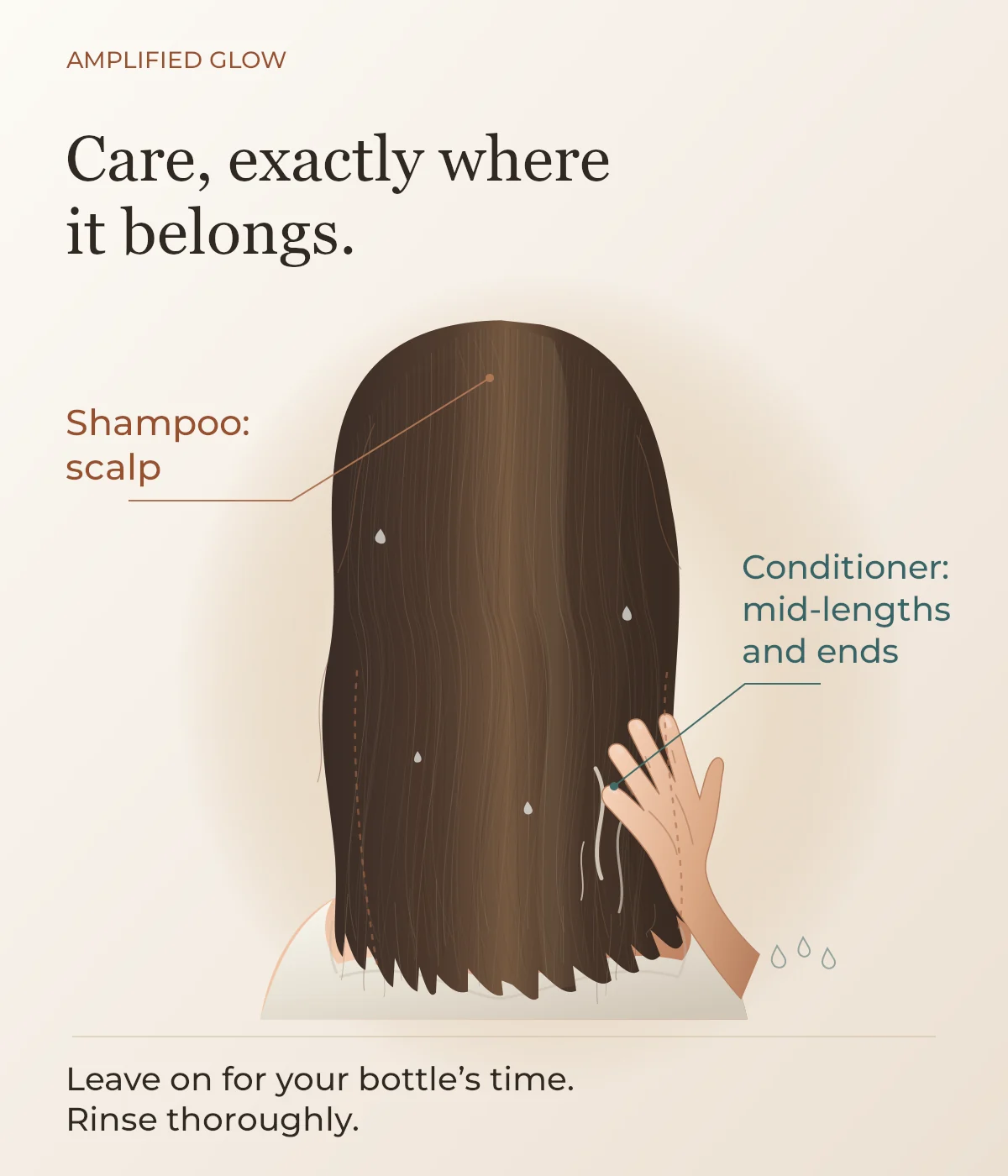
Detangling: wet hair is delicate, so handle it gently. Use a wide-tooth comb, starting at the ends and working upward (AAD). The AAD's timing advice depends on texture: let straight hair dry a little before combing, and detangle thick, curly hair while the conditioner is in. Whatever your hair type, go slowly and ease knots out rather than pulling through them.
If your roots still look flat or greasy
If you're following the label and your roots still collapse, work through these checks:
- Is conditioner reaching your scalp or the hair right at the roots? Check both the scalp itself and the hair closest to it, not just whether it touched skin. Conditioner can creep up there when you start applying at the top of your head or rake it through with your fingers.
- Does the rinse reach every section? That includes underneath layers, at the nape and behind the ears.
- What else goes on near your roots? List styling creams, oils and leave-in sprays. If you use a prescribed scalp treatment, don't stop it without asking whoever prescribed it.
- Change one thing at a time. Changing shampoo, conditioner and styling all at once makes it harder to tell what helped.
Hypothetical example: On wash one, you put conditioner on your mid-lengths and ends and use your usual styling cream at the crown. On wash two, you do exactly the same but skip the styling cream near the crown. Then you compare your roots once your hair is dry.
You may get all of this right and still dislike how your roots look. If so, the formula or your overall routine may simply not give the finish you want, and it's reasonable to reassess. Try not to pin it on one ingredient, though. Silicones, for example, vary in how much they deposit and how easily they wash out, so an ingredient name alone can't explain flatness (Hair Cosmetics review). Likewise, labels like 'buildup' or 'protein overload' can't be confirmed by how your hair feels.
If your ends still feel dry or rough
- Confirm coverage. Did your ends actually get conditioner, the full label time and a complete rinse?
- Review how you handle your hair. Habits worth checking include rubbing shampoo through the lengths instead of focusing it on the scalp, rough towel drying, tugging while brushing and frequent high heat (AAD). Try blotting or squeezing water out instead of rubbing. Over time, everyday weathering and grooming friction contribute to roughness (Hair Cosmetics review).
- Then consider a different product for the job you still need done. If your ends still feel rough after correct use and gentler habits, a different suitably labeled conditioner or a purpose-made leave-in may be worth trying. Dermatologists note that leave-ins can help when rinse-out conditioning isn't enough, including for fine, long, color-treated or heat-styled hair (AAD). Follow the leave-in's own label, and put it only where you need it.
Conditioner improves how hair feels and handles. It can't permanently restore a damaged strand, so set your expectations on easier handling rather than repair.
Rinse-out, leave-in, co-wash or scalp serum: pick the job first
| Format | Where it goes | Rinsed out? | Its job |
|---|---|---|---|
| Rinse-out conditioner (Amplified Glow Berry and Lavender) | Wet mid-lengths and ends, after shampoo | Yes, after the label time | Smoother feel and easier detangling |
| Leave-in conditioner | Lengths, as its own label directs | No | Extra conditioning when rinse-out isn't enough |
| Co-wash (cleansing conditioner) | As its own label directs | Yes | Cleans and conditions in one product (Briogeo) |
| Scalp serum | Where its own label directs | As its own label directs | Scalp care; not automatically a replacement for conditioning dry ends, so check what its label covers (some formulas also moisturize the scalp); see what a scalp serum does |
A few points follow from this table:
- Neither Amplified Glow conditioner is a co-wash. Both labels put shampoo first.
- Don't turn a rinse-out conditioner into a leave-in. Leave it in or dilute it into a spray, and you're using it for a job it wasn't made for (AAD).
- Add new products one at a time. If you add several layers at once, you won't know which one suits you.
Where Berry and Lavender fit
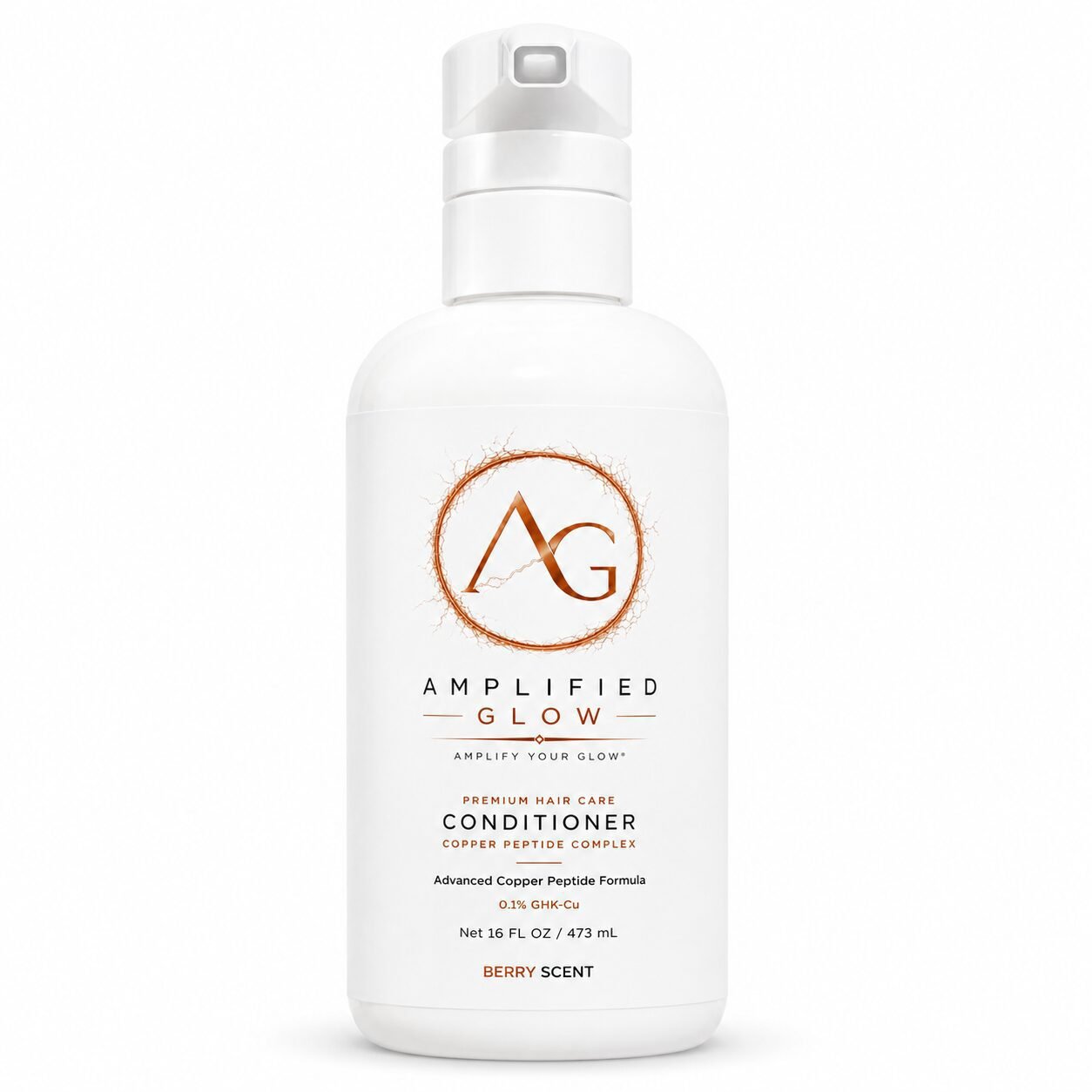
Amplified Glow sells two rinse-out conditioners individually. They share the same basic sequence but are separate formulas, not one formula with a different scent.
| Berry | Lavender | |
|---|---|---|
| Size | 16 fl oz / 473 mL | 16.9 fl oz / 500 mL |
| Scent | Berry | Lavender |
| Directions | After shampoo, clean wet mid-lengths to ends, 2–3 minutes, rinse thoroughly | After shampoo, wet mid-lengths and ends, 2–3 minutes, rinse thoroughly |
| Formula | Separate from Lavender | Separate from Berry |
| Protein ingredient | Lists hydrolyzed keratin | Lists hydrolyzed keratin |
| Before first use | Follow the current label | 24-hour patch test behind the ear or on the inner arm |
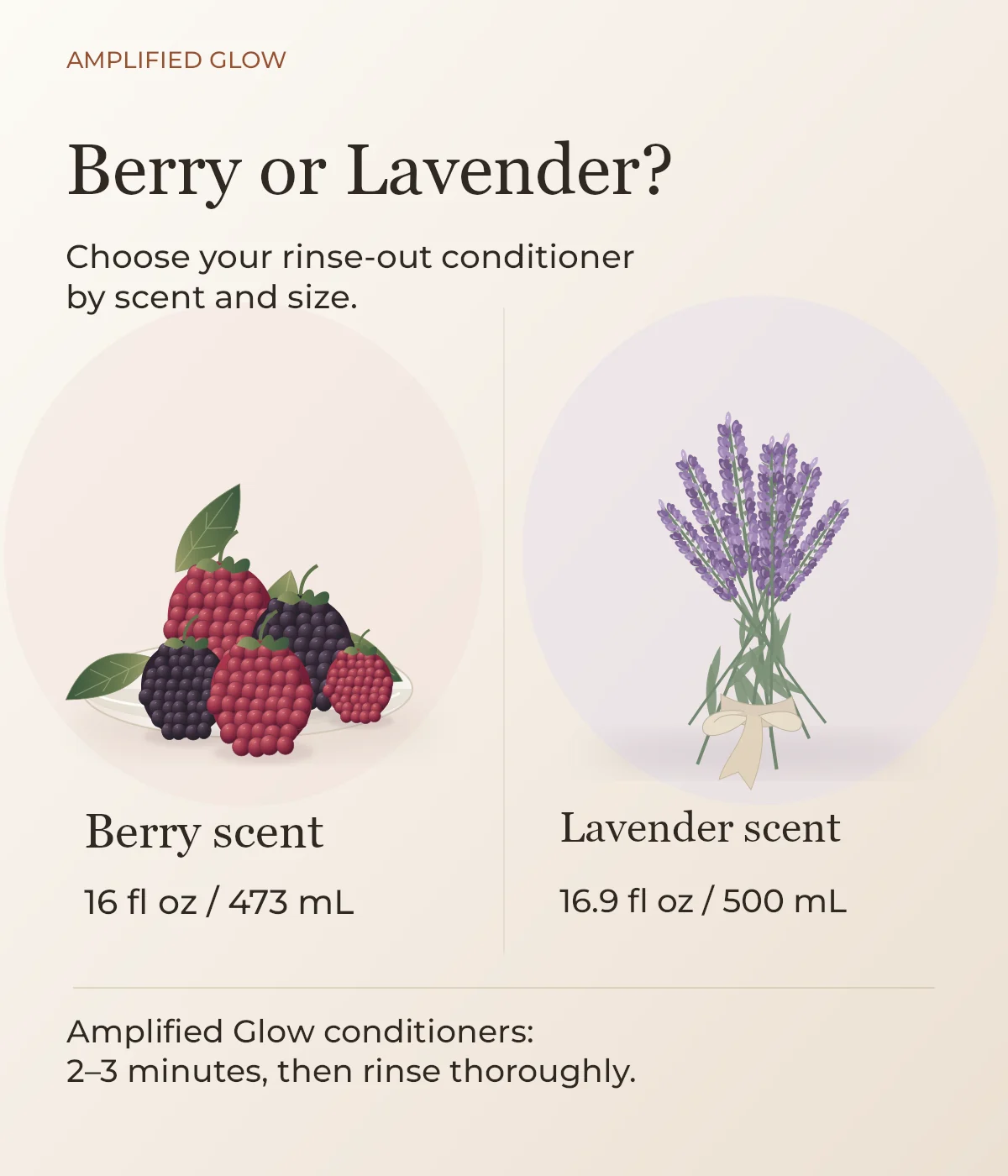
To choose between them, start with the scent you'd enjoy using every wash day. Then read that conditioner's current label for its directions and any first-use instructions: the Berry conditioner ingredients and directions or the Lavender conditioner ingredients and directions. Both list hydrolyzed keratin, so neither is protein-free. Their product details don't establish that either one leaves a lighter finish on fine hair, so don't choose on that basis. Pick on scent, size and directions, then judge the one you use with your wash-day note below. A matching shampoo is optional, and you don't need a set to try one conditioner.
Keep a simple wash-day note
If you've been switching conditioners without getting anywhere, a short note can show you what actually changed. Keep everything else as close to your usual routine as you can, apart from the one change you're deliberately watching (like skipping the crown styling cream in the example above), so each wash is comparable.
| What to note | Wash 1 | Wash 2 |
|---|---|---|
| Conditioner and rough amount | ||
| Where it went (ends only, or higher?) | ||
| Time left on, and rinse | ||
| Styling products and heat | ||
| Roots once dry | ||
| Ends: feel and detangling | ||
| The one change for next time |
There are no scores and no 'correct' result. This is just a way to organize what you notice so your next decision is based on something real.
When it's more than a conditioner question
Sometimes the issue goes beyond conditioner:
- Ongoing breakage. If hair keeps breaking or stays hard to manage despite appropriate conditioning and gentler habits, a dermatologist can help (AAD).
- New thinning or noticeable shedding. This is a different question altogether. Shedding and hair loss have different causes, and a dermatologist can tell them apart (AAD).
Conditioner is a cosmetic product. If you're curious what research does and doesn't say about peptides in hair care, see copper peptide hair research and its limits.
When you're ready to choose, you can compare the rinse-out conditioners side by side. Or keep the conditioner you have and make one placement or handling change first. Either way, your next step will be based on what you've actually noticed about your roots and your ends.