GHK-Cu Explained: The Copper Tripeptide Behind Modern Skin and Scalp Care
You’ve seen it on the label. You’ve maybe even seen it on Instagram, sandwiched between “glow” and “firming” in someone’s serum review. But ask most people what GHK-Cu actually is, and you’ll get a shrug.
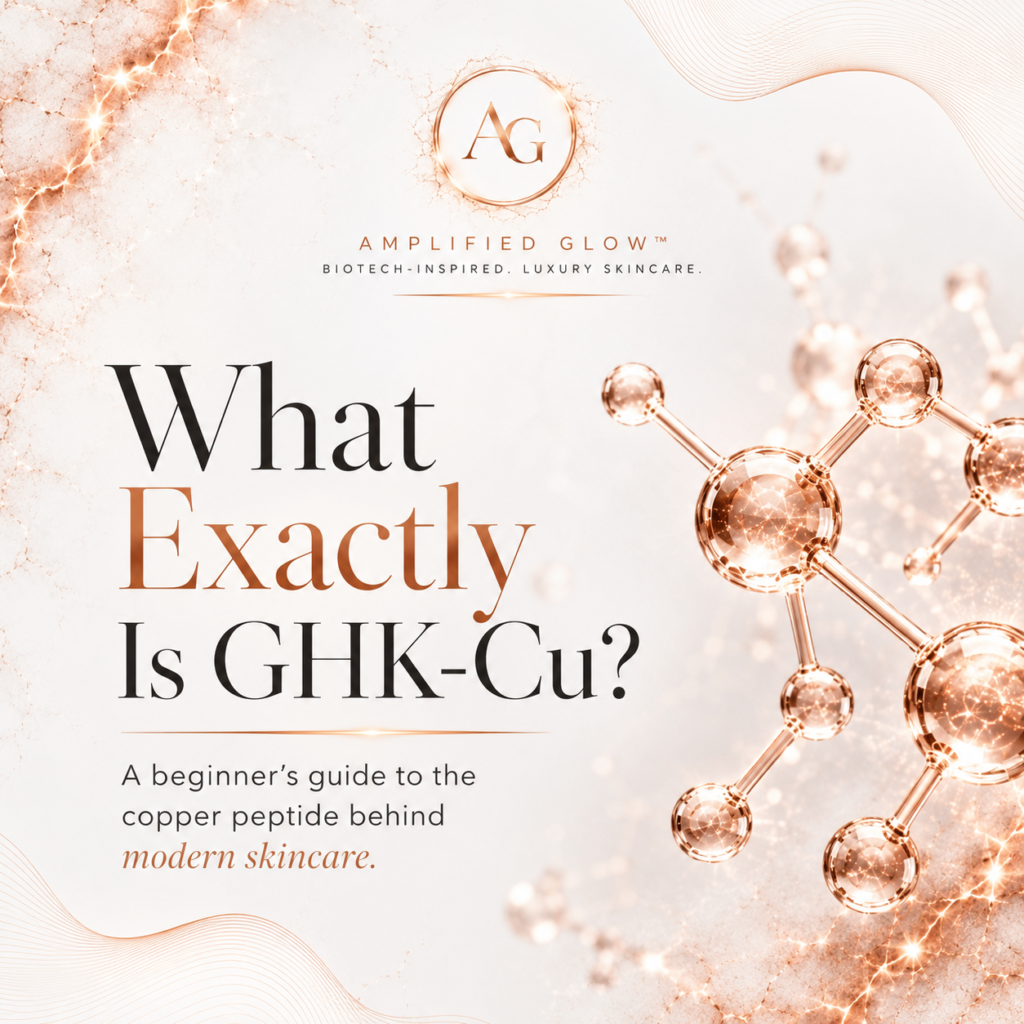
Here’s the short version: GHK-Cu is a naturally occurring copper tripeptide — a three-amino-acid peptide bound to a copper ion — and it’s become one of the most talked-about signal peptides in modern skincare and haircare formulation. Not because it’s trendy for the sake of being trendy, but because it actually does something measurable at the formulation level.
At Amplified Glow, we build routines around ingredients that have a reason behind them. GHK-Cu earns its spot. Let’s break down exactly why.
What Does GHK-Cu Stand For?
GHK-Cu is short for Glycyl-L-Histidyl-L-Lysine copper complex — often written in ingredient lists as copper tripeptide-1. It sounds clinical, but the breakdown is simple once you split it apart:
Part of the Name | What It Means |
G – Glycine | One of three amino acids forming the peptide chain |
H – Histidine | The amino acid that binds copper to the peptide |
K – Lysine | The third amino acid completing the tripeptide |
Cu | Chemical symbol for copper, the trace mineral bound to the peptide |
Tripeptide-1 | The INCI / ingredient-label name you’ll see on packaging |
Put it all together, and GHK-Cu is a copper-binding peptide complex studied for its connection to skin appearance, cellular signaling, and the skin’s extracellular matrix — the structural network of collagen, elastin, and proteins that gives skin its texture and bounce.
Why GHK-Cu Has Become a Skincare Staple (and Not Just a Buzzword)
GHK-Cu’s rise tracks with a bigger shift happening across the entire beauty industry: people are done with heavy creams that just sit on the skin doing very little. They want bioactive ingredients — compounds chosen for a specific mechanism, not a vague “moisturizing” claim on the box.
As a signal peptide, GHK-Cu is studied for how it may interact with the skin’s natural communication pathways, which is exactly why formulators reach for it in products targeting:
- Visible signs of aging
- Skin firmness and elasticity
- Dullness and uneven texture
- Hydration and barrier support
This positions copper peptides like GHK-Cu alongside other well-known active ingredient categories — retinoids, vitamin C, and hyaluronic acid — as part of a more intentional, formulation-first approach to skincare.
Cosmetic Benefits Associated With Copper Peptides
In cosmetic (not medical) skincare, copper peptide ingredients are commonly associated with supporting the appearance of:
- Smoother-looking skin texture
- Firmer-looking, more resilient-looking skin
- A more hydrated, dewy finish
- Reduced visible dullness
- A more refined, even-looking complexion
It’s worth being precise here: cosmetic products support how skin looks and feels as part of a consistent routine. They are not designed to diagnose, treat, cure, or prevent any medical condition — a distinction that matters both for transparency and for accurate expectations.
For a closer look at the evidence and its limitations, read copper peptides for skin: benefits and routine.
GHK-Cu in Haircare and Scalp Health
GHK-Cu isn’t limited to facial skincare. It also appears frequently in scalp care formulations, where copper peptides are discussed in relation to:
- Scalp environment and scalp barrier support
- Healthier-looking hair texture over time
- A more balanced, intentional haircare ritual
A healthy-looking scalp is increasingly treated as the foundation of haircare — the same way a healthy-looking skin barrier underpins a skincare routine. This is part of why GHK-Cu fits naturally across both categories rather than being a single-product ingredient.
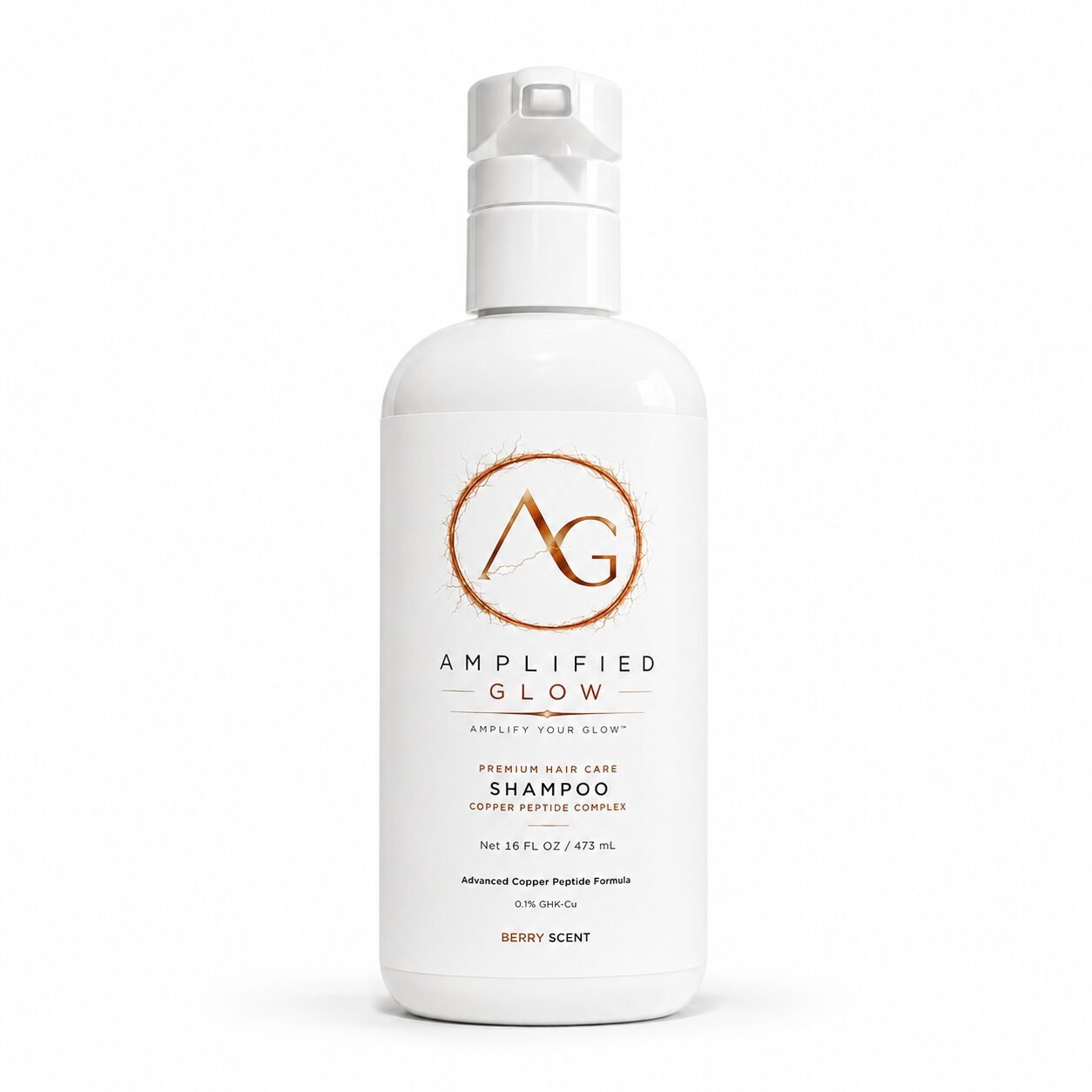
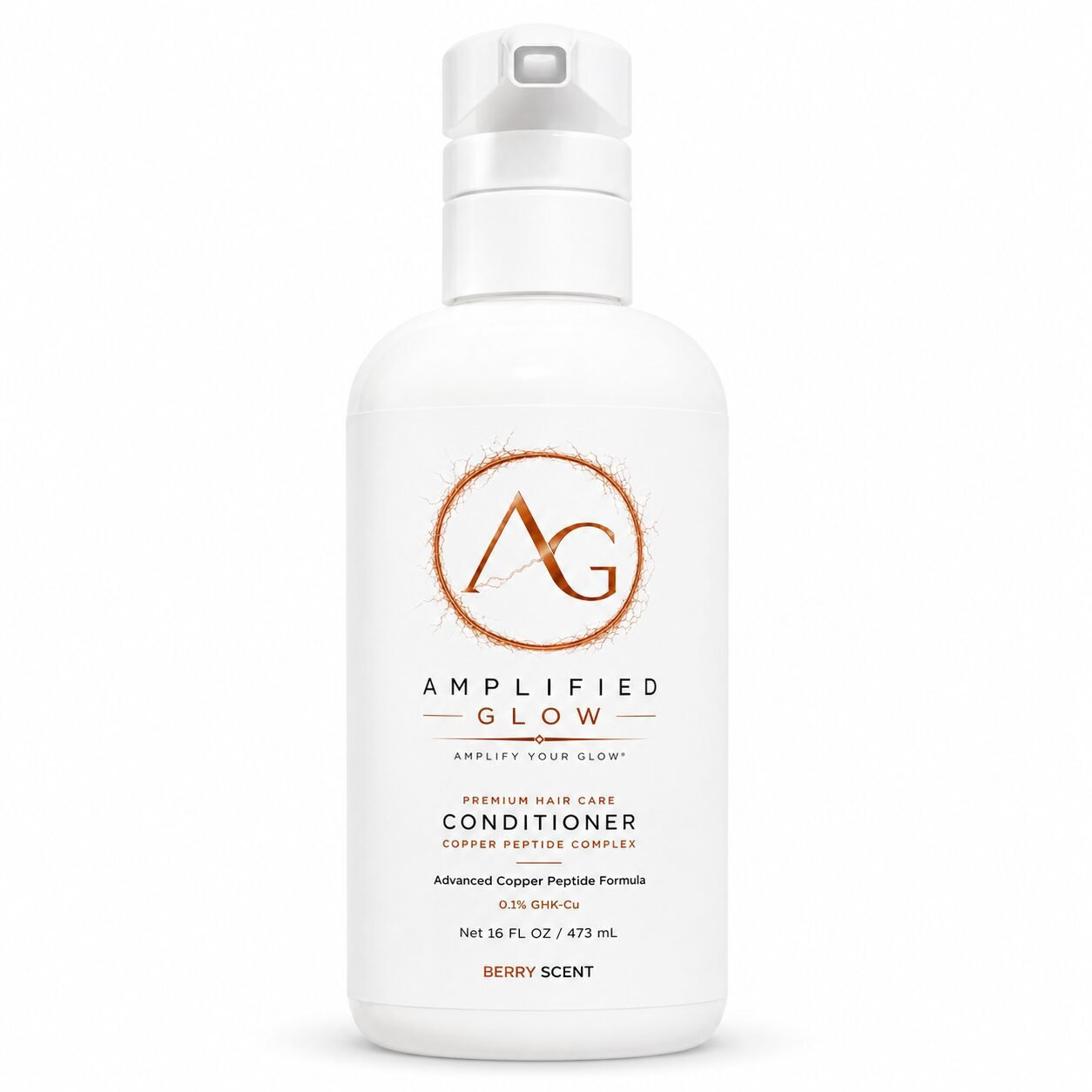
For the hair-specific research and its limits, see copper peptides for hair. Browse the Amplified Glow haircare collection for the separate rinse-off shampoo and conditioner formats.
Where GHK-Cu Fits in a Skincare Routine
Copper peptide formulas are typically found in serums, creams, and targeted treatments, used within a layered routine:
- Cleanse
- Apply GHK-Cu serum or treatment
- Moisturize
- Apply sunscreen (daytime)
For evening routines, copper peptide products are generally applied after cleansing and before a moisturizer — though formulation matters, so always defer to the specific product’s instructions.
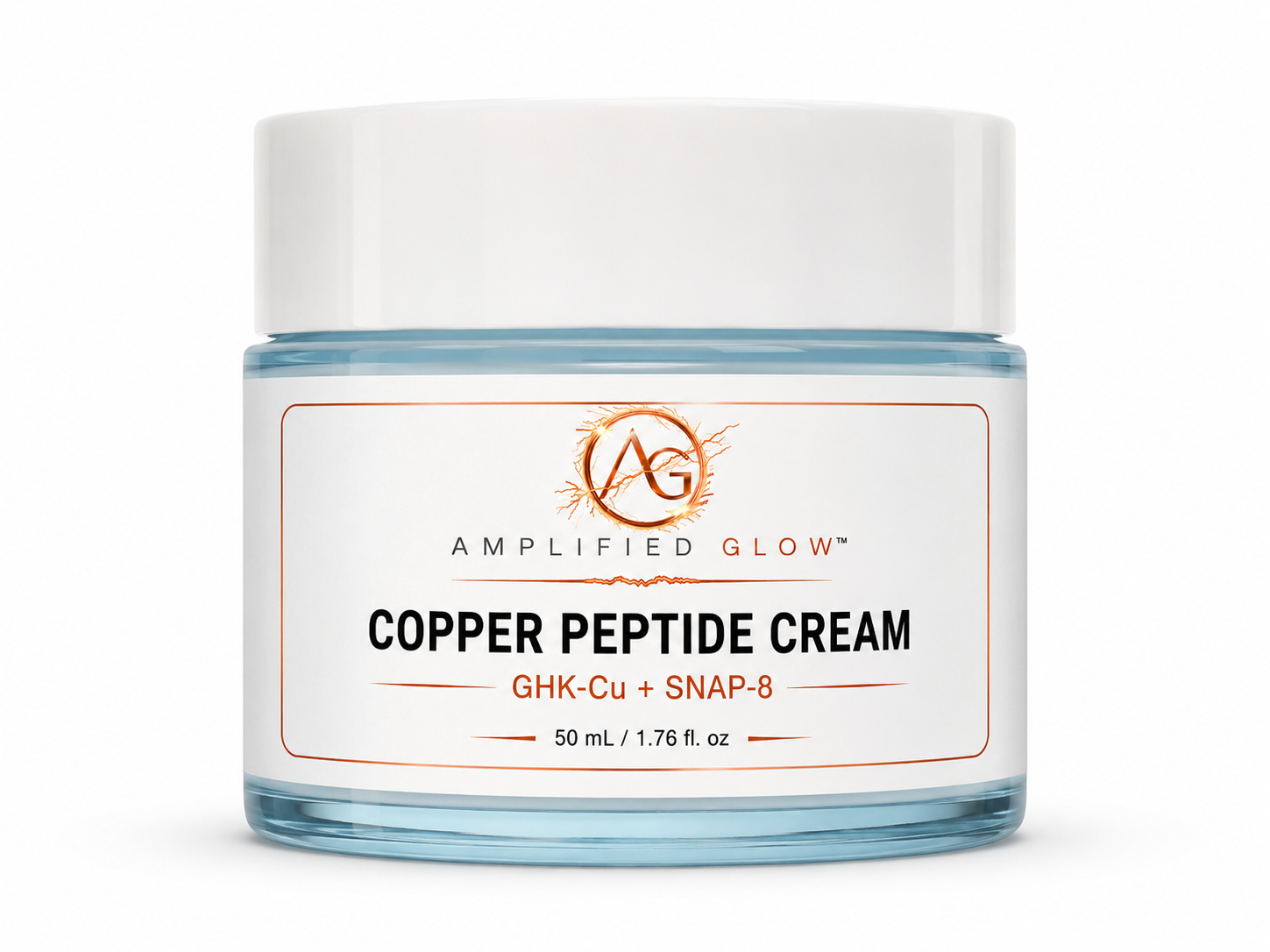
Compare the face serum collection by complete formula and product directions. For one finished-product example, see the GHK-Cu + SNAP-8 Peptide Renewal Serum.
Layering GHK-Cu With Other Active Ingredients
GHK-Cu pairs well with hydrating and barrier-supportive ingredients — but it doesn’t love being crowded by every other active in your cabinet at the same time. Here’s the quick reference:
Layer GHK-Cu With | Separate GHK-Cu From |
Hyaluronic acid | Strong exfoliating acids (AHA/BHA) |
Glycerin | Retinoids |
Supporting peptides | High-strength vitamin C |
Soothing botanical extracts | Other copper-sensitive actives |
The reasoning isn’t complicated: some ingredient combinations can reduce each other’s effectiveness or increase sensitivity when stacked in the same application. The fix is simple — use them at different times of day, or alternate days entirely. Ingredient stacking isn’t always additive; sometimes a simpler routine outperforms a crowded one.
The Amplified Glow Approach to Ingredient Education
Amplified Glow is built on the idea that skincare should be understandable, not mysterious. We believe a luxury product should be able to explain why an ingredient is in the formula — not just that it is.
GHK-Cu fits that philosophy: a peptide with a genuine formulation story, rooted in skin and scalp science, built for people who want their routine to feel deliberate rather than habitual.
Know more. Glow better. Amplify Your Glow™